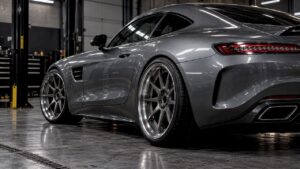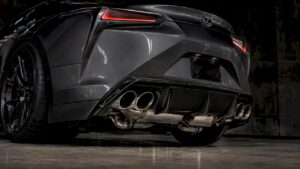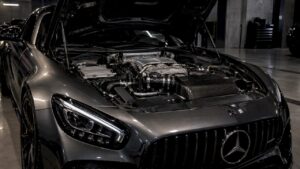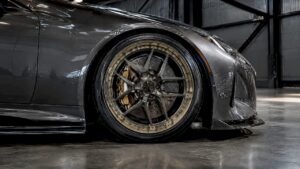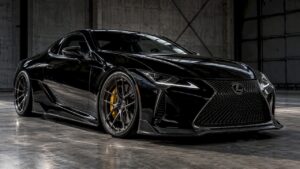
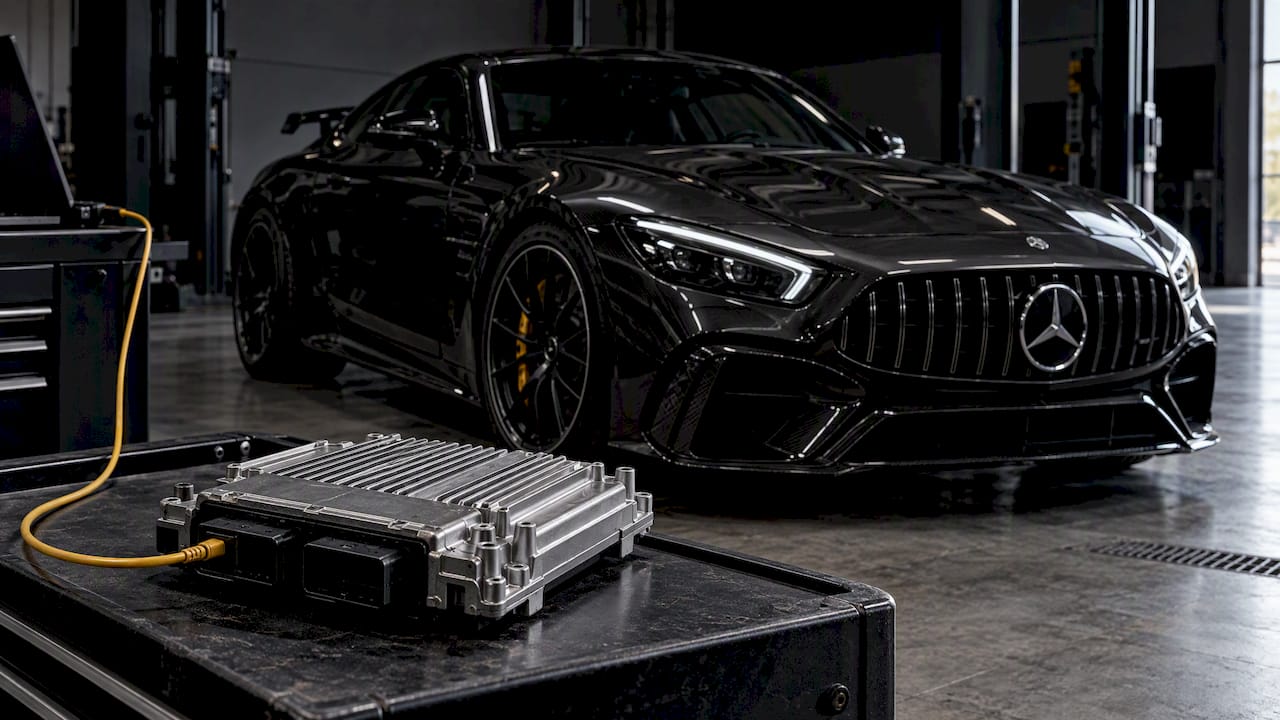
Stage 1 and Stage 2 calibrations from E6 Motorsports pair VIN-linked ECU tuning with high-flow downpipes and intake hardware to raise boost, sharpen ignition timing, and richen fuel delivery on the C192 AMG GT63. Expect meaningful power and torque gains over stock, verified on a dyno, with thermal and drivetrain safeguards built into the install.
TL;DR:
- Stage 1 pairs a high flow intake, 304 stainless downpipes, and recalibration, using 91 to 93 octane pump fuel.
- Stage 2 requires less restrictive downpipes, intercooler or charge piping upgrades, and supporting fuel hardware; higher octane is typically needed, subject to local emissions rules.
- Dyno pulls and datalogs should verify gains, while VIN linked tuning preserves revision history; confirm flange and heat shield fitment before ordering.
- More torque raises heat and drivetrain load, so tuned cars need smoothed shifts and shorter transmission and differential service intervals.
Table of Contents
- What Stage 1 and Stage 2 calibrations change on the C192
- Hardware integration: downpipes, intake modules, and fueling for Stage 1 to 2
- Realistic horsepower and torque gains from Stage 1 and Stage 2
- Thermal management and drivetrain durability
- Installation, calibration workflow, and verification steps
- E6 Engineering perspective: why matched hardware and calibration reduce iteration
- Building a complete Stage 1 and Stage 2 package for your C192
- FAQ
- Sources
What Stage 1 and Stage 2 calibrations change on the C192
The M177-derived twin-turbo V8 in the C192 AMG GT63 ships with conservative boost targets, spark advance, and torque management because Mercedes-AMG has to account for high-mileage reliability, poor-quality fuel in some markets, and a wide range of climates. A calibration unlocks headroom that is already engineered into the hardware but deliberately left unused at the factory.
Stage 1 and Stage 2 tunes touch several interlocking ECU tables rather than a single boost number:
- Boost targets are raised within the turbo and wastegate’s safe operating range.
- Spark advance is adjusted cylinder by cylinder to extract torque without triggering knock retard.
- Injector and fuel trims are richened to match the new air mass entering the cylinders.
- Torque management and transmission shift maps are recalibrated so the 9-speed responds correctly to the new power curve instead of flagging the increase as an error state.
Mercedes-Benz lists the 2026 AMG GT 63 at 577 horsepower and 590 lb-ft of torque from the factory, with a 0 to 60 mph time of roughly 3.1 to 3.2 seconds and a curb weight between 4,178 and 4,343 pounds depending on trim. Those factory numbers are the baseline every Stage 1 and Stage 2 gain is measured against.
Hardware integration: downpipes, intake modules, and fueling for Stage 1 to 2
A calibration alone only reshuffles what the stock hardware already allows. Real, repeatable gains on the C192 require hardware that removes the physical restrictions the ECU is working around, which is why E6 Motorsports packages are hardware-included rather than software-only.
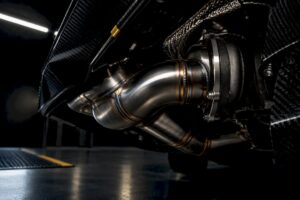
- Stage 1 combines a high-flow intake module with mandrel-bent 304 stainless downpipes and a matching ECU recalibration. The intake reduces restriction ahead of the turbos, the downpipes cut backpressure to speed spool, and the recalibration raises boost and timing to use the freed-up airflow.
- Stage 2 steps up to less-restrictive downpipes, often catless or high-flow catted depending on local emissions rules, paired with intercooler or charge-piping upgrades and supporting fuel system hardware to keep injector duty cycle and fuel pressure within a safe range at higher boost.
- Exhaust flow controls, including valved sections similar to what we have built for other AMG platforms, manage backpressure and sound without sacrificing the spool benefit of the downpipe work.
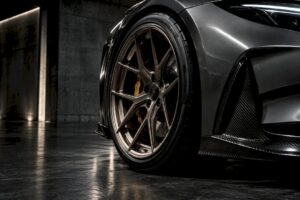
Fitment matters as much as flow. Our C192-specific downpipe guide documents TIG-flanged joints and heat shielding sized for the GT63’s engine bay, which prevents the fitment issues that generic, non-platform-specific downpipes introduce. Lightweight E6 Forged wheels factor into the same hardware conversation because every pound removed from rotating and unsprung mass is a pound the drivetrain does not have to accelerate, which matters more as torque climbs.
Pro Tip: Confirm downpipe flange type and heat shield compatibility before ordering Stage 2 hardware, since a mismatched flange is the most common cause of install delays on the C192.
Realistic horsepower and torque gains from Stage 1 and Stage 2
Numbers get thrown around loosely in the AMG GT tuning space, so it helps to separate conservative gains from aggressive ones and to be clear about what fuel each requires.
- Stage 1 gains are modest and reliable on 91 to 93 octane pump fuel, built around the intake and downpipe combination described above plus a safe recalibration of boost and timing.
- Stage 2 gains run higher but depend on the full hardware package, including the less-restrictive downpipes and supporting fuel system upgrades, and typically call for higher-octane fuel to control knock at the increased boost and timing levels.
- Drivability is preserved by recalibrating shift maps and torque management so the increase feels linear through every drive mode rather than arriving as a spike that upsets traction control.
Professional calibrators treat the M177’s factory tune as deliberately conservative, which is why iterative, VIN-linked tuning rather than a single static file is the safer path to these gains. Every claimed figure in a serious Stage 1 or Stage 2 program should be dyno-verified against a documented baseline pull, not estimated from the calibration file alone. Traction control thresholds are also adjusted in Stage 2 files so the added torque does not overwhelm the rear axle under hard launches, which keeps the car usable on the street as well as the track.
Thermal management and drivetrain durability
More boost and more torque mean more heat and more mechanical stress, and a calibration that ignores either is incomplete. Increased cylinder pressure raises charge air temperatures, which puts more load on the intercooler circuit, and sustained higher torque output increases wear on clutch packs and differential components over time.
- Intercooler efficiency becomes the limiting factor on repeated pulls, so Stage 2 builds often pair with upgraded charge piping to reduce heat soak between runs.
- Transmission and differential service intervals should be shortened on a tuned car, since fluid breaks down faster under sustained higher torque loads.
- Torque-spike mitigation in the calibration itself, through smoothed shift maps, reduces the shock loading that accelerates clutch and gear wear.
Reducing unsprung weight with E6 Forged monoblock wheels and adding downforce through E6 Carbon aerodynamic bodywork both work on the traction side of the same equation: less unsprung mass lets the suspension respond faster to load transfer, and added downforce keeps the contact patch loaded at speed, which reduces the wheelspin events that otherwise translate into drivetrain shock loads.
Pro Tip: Schedule a transmission fluid and differential service after a Stage 2 install, then follow a shortened service interval for improved drivetrain durability rather than the standard factory schedule.

Installation, calibration workflow, and verification steps
A Stage 1 or Stage 2 build on the C192 follows a sequence, not a single visit, and skipping steps is where most disappointing results come from.
- Baseline dyno pull and health check to confirm the engine, turbos, and sensors are in factory condition before any hardware goes on.
- Hardware installation, including downpipes, intake modules, and any Stage 2 fueling or intercooler components.
- VIN-linked ECU flash, tying the calibration to the specific vehicle so future revisions or Stage 2 upgrades build on a documented history rather than starting over.
- Datalog review under real driving conditions to confirm fuel trims, boost targets, and knock counts are behaving as expected.
- Validation dyno pull and road test to confirm the final gain against the documented baseline.
VIN-linking matters because it lets a Stage 1 customer step up to Stage 2 later without re-establishing a baseline from scratch, and it gives a shop a documented history if anything needs revisiting. Maintaining dyno sheets, datalogs, and installation records protects resale value and provides a clear verified record of modifications, which is essential for compliance in regions with emissions inspections.
E6 Engineering perspective: why matched hardware and calibration reduce iteration
Fitment First engineering means a calibration is only as good as the hardware feeding it. Our autoclave-cured carbon components, 6061 T6 monoblock wheels engineered for C192 5×112 fitment, and mandrel-bent 304 stainless downpipes are specified together rather than sold as unrelated parts. That integration is what cuts down the back-and-forth tuning that happens when a shop has to guess how a third-party downpipe or wheel offset interacts with a calibration file. Matching wheel weight, aero load, and exhaust flow to the tune from the start is what makes a Stage 2 package track-reliable instead of a one-pull number.
— E6 Engineering
Building a complete Stage 1 and Stage 2 package for your C192
A calibration is only half the build. Pairing an E6 Forged 6061 T6 monoblock wheel set with mandrel-bent downpipes and carbon aero gives the drivetrain somewhere productive to put the added torque instead of spinning it into tire wear or axle shock. We engineer wheels, carbon components, and performance hardware as one system, which is the difference between a Stage 2 file that reads well on paper and one that holds up lap after lap.
- Forged monoblock and luxury wheels reduce unsprung mass for sharper response to load transfer under hard acceleration.
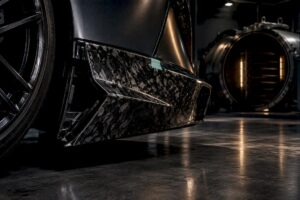
- Carbon fiber parts add aerodynamic downforce that keeps the contact patch loaded at speed.
- Professional installation covers hardware fitment, VIN-linked flashing, and dyno verification in one engineering-led process.
For a full Stage 1 or Stage 2 build, from wheel selection to downpipe fitment to the final calibration, start with our engineering and product catalog and consult directly with our team on what your C192 needs.
FAQ
Is the GT63 S faster than an M8?
Both cars compete in the same performance tier, but direct acceleration and top speed figures vary by specific trim and options package. The most reliable comparison is each manufacturer’s published spec sheet for the exact trim in question rather than a blanket claim either way.
Why is the AMG GT 63 so heavy?
The C192 AMG GT 63 carries a curb weight between 4,178 and 4,343 pounds depending on trim, largely due to its all-wheel-drive hardware, twin-turbo V8, and the structural reinforcement needed for a four-door grand tourer body style. Reducing unsprung weight through forged wheels is one practical way to offset that mass where it affects handling most.
Which AMG GT63 is the fastest?
Trim-specific acceleration and top speed vary across the GT63 lineup, and the most current figures are published directly on Mercedes-Benz USA’s model page. A properly verified Stage 1 or Stage 2 calibration with supporting hardware can meaningfully close the gap between trims, but the result depends on the specific vehicle and installed hardware.
What’s faster, the SL63 or the GT63?
The two share platform and powertrain lineage but differ in weight distribution, gearing, and body style, which affects real-world acceleration more than horsepower alone. Published factory specifications for each model are the accurate starting point before comparing tuned results.
Do I need higher octane fuel for Stage 2 tuning?
Stage 2 calibrations on the C192 typically call for higher-octane fuel to control knock at the increased boost and timing levels used to reach those gains. Stage 1 calibrations are generally tuned to run safely on standard 91 to 93 octane pump fuel.
Recommended
- Faster Spool, Engineered Fit for C192 AMG GT63: E6 Downpipes
- Fitment First: E6 Forged 6061 T6 Wheels for C192 AMG GT63 5×112
- Autoclaved 2×2 Twill Delivers 0.1 mm Fit vs Forged Carbon on C192 AMG GT63
- E6 Fitment First: Downforce & Thermal Management for C192 AMG GT63
Pricing, custom fitment options, and surface finishes subject to availability. Please contact E6 Carbon or E6 Forged directly to confirm vehicle-specific offset parameters, brake clearances, and current lead times prior to placing your order.