TL;DR:
- Lightweight wheels offer measurable but modest performance gains, mainly improving feel and responsiveness.
- Proper fitment, quality materials, and correct installation are essential to realizing benefits and ensuring safety.
- The real value lies in improved driving confidence and feedback, rather than dramatic lap-time reductions.
Plenty of performance car owners have swapped their factory wheels for a lighter set, expecting the world to change overnight. Sometimes it does. Often, it doesn’t, at least not in the way you’d expect at the track or the stopwatch. Lightweight wheels performance gains are real but not always dramatic on the street, and controlled testing on a BMW M3 showed measurable yet relatively small timing differences across wheel weights. This guide covers the real benefits, the preparation process, the installation steps, and exactly how to verify your results so you squeeze every advantage from your upgrade.
Table of Contents
- Understanding lightweight wheels: Benefits and limitations
- Pre-upgrade essentials: What to know and prepare
- Step-by-step: How to upgrade to lightweight wheels
- How to verify results: Performance, feel, and safety checks
- What most enthusiasts overlook about lightweight wheel upgrades
- Upgrade your wheels with premium options
- Frequently asked questions
Key Takeaways
| Point | Details |
|---|---|
| Realistic gains | Lightweight wheels improve performance, but the speed gains are usually modest on public roads. |
| Better feel | Subjective handling and driver confidence often improve more than raw acceleration numbers. |
| Preparation matters | Proper fitment, materials, and tools ensure safety and maximize benefits from your upgrade. |
| Verify your results | Always test and check both the physical and driving feel after installation for best outcomes. |
Understanding lightweight wheels: Benefits and limitations
Performance wheel upgrades often get oversold. You’ve probably seen the forum posts claiming a lightweight set knocked a full second off lap times. The reality is more nuanced, and understanding the physics behind it makes you a smarter buyer.
Rotating mass vs. unsprung weight: why both matter
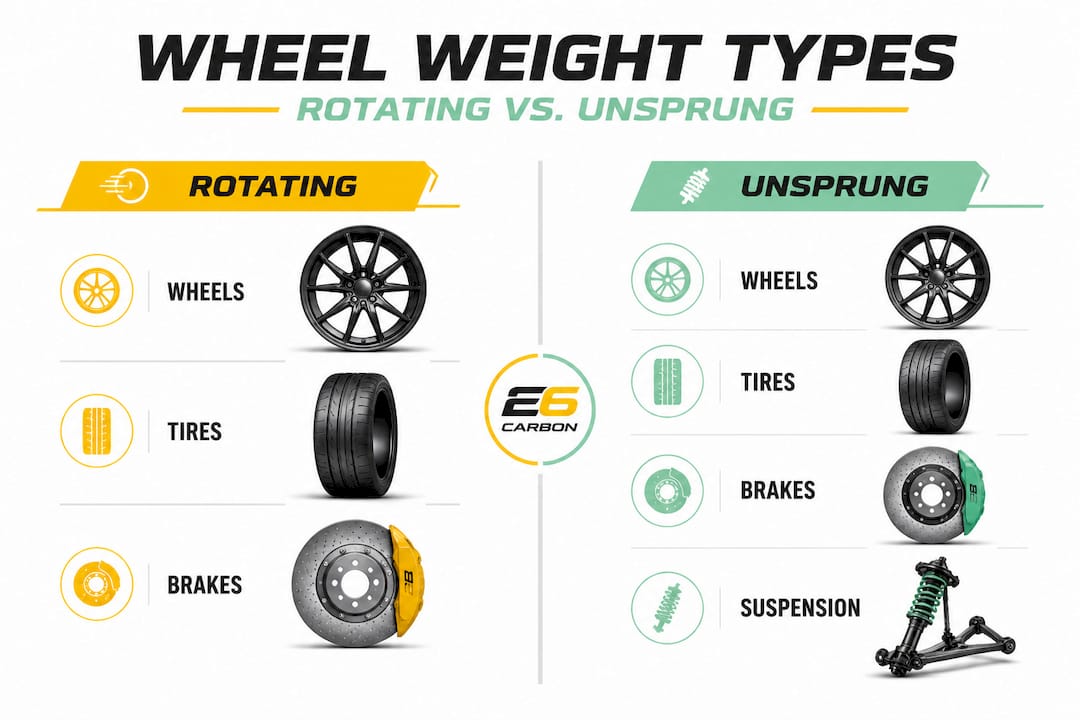
Unsprung weight refers to everything not supported by the suspension: wheels, tires, brake rotors, and calipers. Less unsprung weight means the suspension can react faster to road imperfections and maintain better contact with the pavement. Rotating mass goes a step further. Because a spinning wheel stores kinetic energy, the heavier it is, the more energy your engine burns just keeping it moving. Reducing rotating mass at the wheel improves acceleration response, braking feel, and even fuel efficiency at sustained speeds.
Here’s where it gets interesting. Most enthusiasts dramatically overestimate how large these gains will feel on public roads. The BMW M3 data from real-world testing tells a clear story:
| Wheel weight (per wheel) | 31–87 mph acceleration |
|---|---|
| 20 lb | 5.76 seconds |
| 38 lb | 5.93 seconds |
| 52 lb | 6.07 seconds |
The spread between the lightest and heaviest wheel is 0.31 seconds. Meaningful at the track. Nearly imperceptible to most drivers in daily street driving. The same test added 130 lb of ballast to the car running the lightest wheels and recorded 5.88 seconds, showing that total vehicle mass matters, but the rotational component adds a unique penalty beyond simple weight.
Where you actually feel the difference
Here’s what’s counterintuitive: the subjective driving feel with lighter wheels often improves more than the raw numbers suggest. Steering inputs feel crisper. Direction changes feel more alert. On a winding road or autocross course, that responsiveness builds confidence and pushes your driving further than a 0.3-second gap on a straight ever could.
You can explore a deeper wheel upgrade performance analysis that breaks down how these dynamics interact with suspension tuning and tire choice. The key takeaway: track-focused setups benefit more from lightweight wheels than highway commutes do. If your driving is 80% freeway, your gains will be proportionally modest. If you’re on curvy roads or occasional track days, the feel improvement is genuine and worth the investment.
The benefits at a glance:
- Faster suspension response over bumps and mid-corner imperfections
- Reduced braking distances through lower rotational inertia
- Improved steering feedback and feel at lower speeds
- Potential fuel savings at sustained highway speeds
- Visual and aesthetic upgrade that signals intent
Pre-upgrade essentials: What to know and prepare
Armed with a clear view of the benefits and trade-offs, you’re ready to prepare for a successful wheel upgrade. Rushing into a purchase without confirming fitment specs is the fastest way to waste money.
Fitment specs: the non-negotiables
Before anything else, confirm these four numbers for your specific vehicle:
- Bolt pattern: The number of bolts and the diameter of the circle they form (e.g., 5×120 for many BMWs). One mismatch and the wheel won’t mount.
- Offset: The distance from the wheel’s centerline to its mounting face, measured in millimeters. Too much offset and your tires rub. Too little and you risk clearance issues with brake calipers.
- Diameter and width: Verify that the new wheel diameter works with your current or intended tire profile.
- Load rating: Every wheel has a rated load capacity. Never exceed it, especially on heavier sports cars.
Consulting a performance wheel selection guide before purchasing will save you significant headaches and return shipping fees.
Comparing wheel materials
The two dominant lightweight materials in the premium aftermarket are forged aluminum and carbon fiber. Here’s a direct comparison:
| Material | Typical weight saving | Strength | Cost | Best use |
|---|---|---|---|---|
| Forged aluminum | 25–40% vs. cast | Very high | Moderate to high | Street and track |
| Carbon fiber | 40–60% vs. cast | Extremely high | Premium | Track, show, and performance street |
Forged aluminum is the workhorse of performance wheels. The forging process aligns the grain structure of the metal, making the wheel dramatically stronger than a cast equivalent at the same weight. Carbon fiber takes it further, offering stiffness and weight reduction that forged metal can’t match, at a premium price point that reflects the manufacturing complexity.
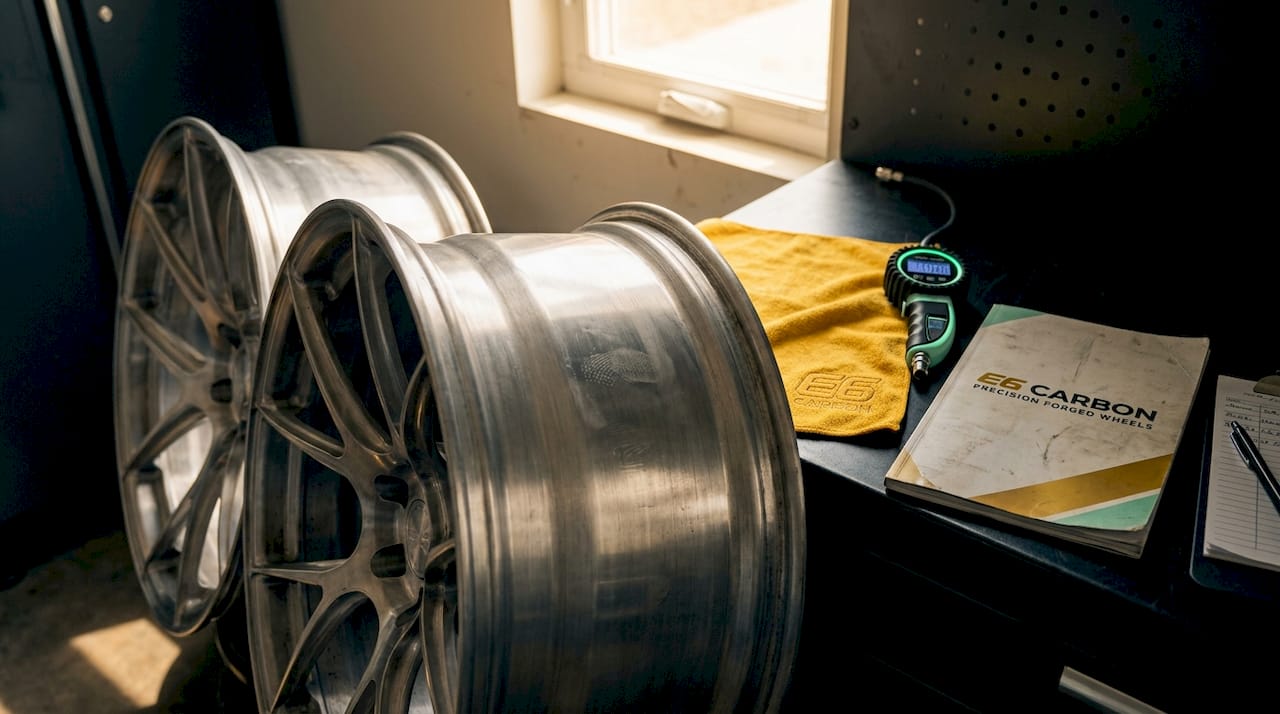
Pro Tip: Don’t choose the lightest carbon fiber wheel available if you drive on rough urban roads regularly. The wheel needs to match your use case. A well-specified forged aluminum set used correctly will outperform a mismatched carbon fiber set every time.
Wheel weight changes can shift feel and confidence more than outright acceleration numbers on public roads, which makes material choice for your intended environment critically important.
What to gather before installation:
- Torque wrench (calibrated to manufacturer spec)
- Breaker bar or impact wrench for removal
- Wheel spacers if needed for correct fitment (verify clearances)
- Thread lock for lug nuts if specified
- New valve stems if yours are aged or corroded
Check out the custom wheels buying process for a thorough breakdown of what to confirm with your manufacturer or retailer before placing an order.
Step-by-step: How to upgrade to lightweight wheels
With all materials and fitment confirmed, you can move on to the actual installation process. A clean, methodical approach protects your new wheels and your car.
1. Remove the old wheels safely
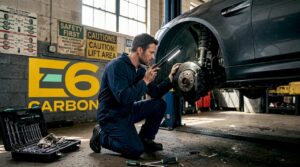
Jack the car on a solid, level surface. Always use jack stands, never trust a floor jack alone when working under a vehicle. Loosen lug nuts before lifting the car to avoid spinning the wheel. Remove them fully, then pull the wheel straight off the hub. Inspect the hub face, lug studs, and brake rotor surface before moving forward. Any corrosion, rust buildup, or damaged studs needs to be addressed before mounting new hardware.
2. Clean the hub face
A dirty or corroded hub face causes vibration, no matter how well-balanced your new wheels are. Use a wire brush to clean the mating surface thoroughly. A clean, flat interface is the foundation of proper wheel seating.
3. Mount and torque the new wheels
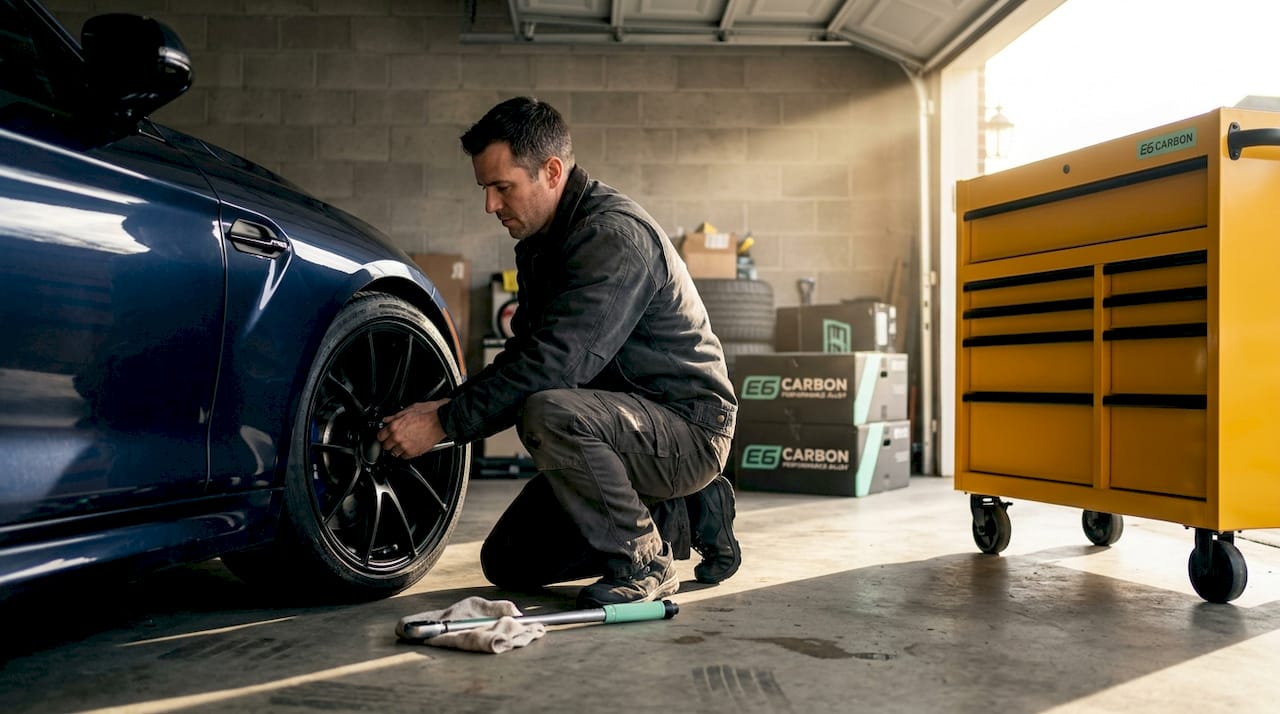
Thread lug nuts by hand first to avoid cross-threading. Then use your torque wrench to tighten in a star pattern across opposing lugs. Never torque in a circle. The star pattern ensures even clamping force. Torque to the manufacturer’s specification for your vehicle, typically between 85 and 120 ft-lbs for most performance cars, though always confirm the exact spec.
4. Balance your tires properly
New wheels demand a fresh balance, even if you’re reusing tires. Have a shop perform a road force balance if possible. Standard spin balancing corrects static imbalance. Road force balancing also detects lateral force variation in the tire itself, which is especially important with sticky performance tires that can have uneven internal structure.
Pro Tip: Ask for the balance weights to be placed inside the barrel of the wheel rather than on the rim edge whenever possible. This preserves the clean look of your new wheels and avoids marking the finish.
5. Set correct tire pressure
Check the vehicle manufacturer’s recommended pressure for your tire size. Lightweight wheels often pair with lower-profile tires that are sensitive to pressure deviation. Even 3 PSI off the target can change handling balance noticeably.
6. Final inspection
Before driving, visually confirm that each lug nut is fully seated against the wheel, that there’s no visible gap between the wheel and hub face, and that brake calipers have adequate clearance on all four corners. A quick spin by hand with the wheel still lifted will reveal immediate rubbing issues.
Subjective differences can be larger than the stopwatch spread, and confidence in your installation directly feeds into the driving experience you’ll feel on the road. Explore your wheel finish tips and carbon wheel options to round out your knowledge before your first drive.
How to verify results: Performance, feel, and safety checks
After installation, it’s critical to verify your results and address any issues that may arise. Don’t skip this phase. It confirms your investment is working and catches problems early.
Performance testing before and after
Run a repeatable test: same road, same direction, same temperature, same fuel level. A rolling acceleration from 30 to 80 mph with a GPS-based app gives you comparable data. Don’t expect miracles on the street. What you’re looking for is consistency, not massive deltas.
| Test metric | What to assess |
|---|---|
| 30–80 mph roll time | Compare pre and post with GPS timer |
| Braking distance | Mark a consistent stop point from 60 mph |
| Steering feel (corners) | Note response quality, not just speed |
| Ride quality | Check for new harshness or vibration |
Assessing driver confidence
This is often overlooked but genuinely matters. Static ballast partially replicates wheel weight effects, but it doesn’t duplicate the rotational mass or the real-world dynamic feel of lighter wheels, which means the subjective driving experience is a legitimate performance metric. Note how the car changes direction. Feel whether steering inputs feel more direct. Check if the car follows your line more accurately in corners. These impressions are valid data.
What to look for after the first 50 miles:
- Vibration at any speed (indicates balance issue or improper seating)
- Pulling to one side (possible torque inconsistency or tire pressure mismatch)
- Unusual noises from the wheel area (check for rubbing or loose hardware)
- Lug nut torque check after the first 50 miles (heat cycles can cause slight settling)
For an honest look at what carbon and forged wheels truly deliver versus the marketing claims, the carbon wheel mythbusting resource cuts through the noise and grounds expectations in tested reality.
What most enthusiasts overlook about lightweight wheel upgrades
Here’s the uncomfortable truth: most enthusiasts focus heavily on the weight number printed in a spec sheet and almost nothing on whether the wheel actually matches their driving reality. The obsession with grams saved can lead someone to buy a razor-thin carbon wheel designed for track use and fit it on a car they drive through pothole-riddled city streets. That’s not performance optimization. That’s expensive destruction in slow motion.
The real value of lighter wheels on public roads is the shift in feel, feedback, and confidence, not a transformative lap-time advantage. And feel matters enormously. A driver who trusts their car’s communication through the steering wheel and seat takes better lines, brakes later, and exits corners faster. The wheel is part of that communication system.
The second thing overlooked is tire matching. You can bolt the lightest wheels on the market to your Ferrari and pair them with budget tires, and the result will be worse than factory spec. The wheel and tire combination is a system. Match the compound, profile, and construction to how you actually drive, and the gains multiply. Getting this right is what separates enthusiasts who genuinely improve their cars from those who just spend more money.
Finally: never underestimate a proper installation. The way a wheel is torqued, balanced, and seated is the single biggest factor in whether your upgrade delivers. You can buy the most beautiful, technically advanced wheel available, and a sloppy install will turn it into a vibrating disappointment. The aesthetic and performance case for premium wheels is compelling, but the technical foundation underneath it has to be solid.
Upgrade your wheels with premium options
Ready to move from theory to hardware? E6 Carbon and E6 Forged offer some of the most precisely engineered lightweight wheels available for BMW, Ferrari, Lamborghini, McLaren, and other performance platforms.
Explore the full case for carbon fiber wheel benefits before you commit to a material, and check out the forged wheel safety guide to understand how to evaluate any wheel before purchase. For those who want a stunning multi-piece build with genuine track credentials, the AR03 multipiece wheels represent the kind of bespoke, precision-crafted option that delivers both on the scale and on the road. Every wheel in the E6 lineup is engineered with fitment, load rating, and real-world performance at the center of the design process.
Frequently asked questions
Do lightweight wheels improve acceleration noticeably on the street?
While lightweight wheels can reduce acceleration times, the difference is usually under 0.3 seconds in real-world testing, which most drivers won’t feel as a dramatic change during street driving.
Is the driving feel with lightweight wheels really different?
Many drivers report that steering response and feedback feel sharper, even when stopwatch gains are modest, because wheel weight changes affect confidence and feel more than outright acceleration numbers on public roads.
What’s the risk of choosing wheels that are too light?
Choosing wheels purely for minimum weight can sacrifice structural strength, durability, and safety. Always select wheels from a reputable manufacturer with verified load ratings for your specific vehicle and intended use.
Will adding ballast to a car fully replicate the effects of heavier wheels?
No. While static ballast partially replicates heavier wheel effects, it doesn’t fully duplicate rotational mass or the dynamic behavior that rotating weight creates during acceleration, braking, and cornering.