TL;DR:
- Precise wheel specification involves matching diameter, width, bolt pattern, offset, and center bore to a vehicle’s exact requirements. Correct specifications improve handling, appearance, and safety, while incorrect ones cause vibration, contact, or interference. Using verified measurement, material selection, and proper installation ensures optimal performance for high-end vehicles.
Precise wheel specification is the process of matching diameter, width, bolt pattern, offset, center bore, and material to a vehicle’s exact engineering tolerances. Get it wrong on a Mercedes-AMG GT, Lexus LC500, or McLaren 720S, and you face vibration, caliper contact, or suspension interference. Get it right, and the car handles better, looks sharper, and runs safer. Knowing how to spec high-end wheels means working through each parameter in sequence, not guessing based on looks. This guide covers every step, from raw measurements to material selection and final installation.
What key specs define a high-end wheel?
Every wheel specification starts with five numbers: diameter, width, bolt pattern, offset, and center bore. Each one controls a different aspect of fitment, and none can be ignored.
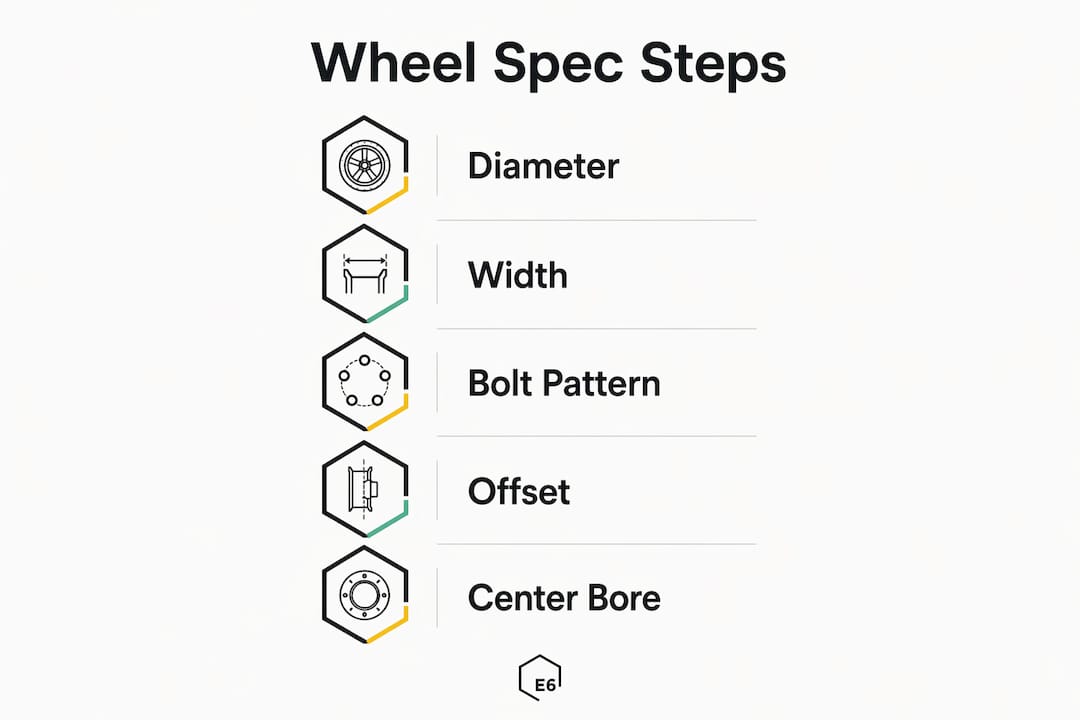
Diameter and width are expressed as a paired measurement, such as 20×10.5 inches. Diameter sets the tire profile and affects steering response. Width determines how much tire contact patch you can run, which directly influences grip and braking stability. On a Mercedes-AMG C63, moving from a factory 19-inch to a 20-inch wheel changes the tire sidewall height, which affects ride compliance and speedometer accuracy.
Bolt pattern is the number of lugs and the circle diameter they sit on, written as 5×112 for most AMG platforms. A mismatch here means the wheel physically cannot mount. There is no workaround.
- Offset (ET): Measured in millimeters, offset positions the wheel relative to the hub face. Positive ET pushes the wheel inward; negative ET creates a wider stance. Offset errors cause fender rubbing or suspension contact.
- Backspacing: The distance from the hub mounting surface to the inner wheel edge. Offset and backspacing must be verified together to prevent interference with suspension components and bodywork.
- Center bore: The hole at the wheel’s center. A hub-centric fit matches this bore to the vehicle’s hub diameter exactly, supporting the wheel’s weight and eliminating vibration. Hub-centric rings compensate for bore mismatches, but an OEM-matched bore is always the better solution.
Pro Tip: Measure your vehicle’s center bore with a digital caliper before ordering. Lexus LC500 uses a 60.1mm bore; McLaren platforms vary by model year. Confirm the spec directly rather than relying on generic fitment charts.
How do material and construction affect performance?
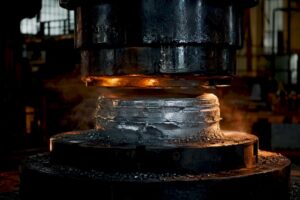
Material choice separates a premium wheel from a catalog part. Monoblock forged wheels are machined from aerospace-grade 6061-T6 aluminum billet, compressed under extreme pressure. The result is a grain structure that is denser and stronger than cast aluminum at a fraction of the weight. Forged wheels dominate motorsport and high-end sports car markets for exactly this reason.
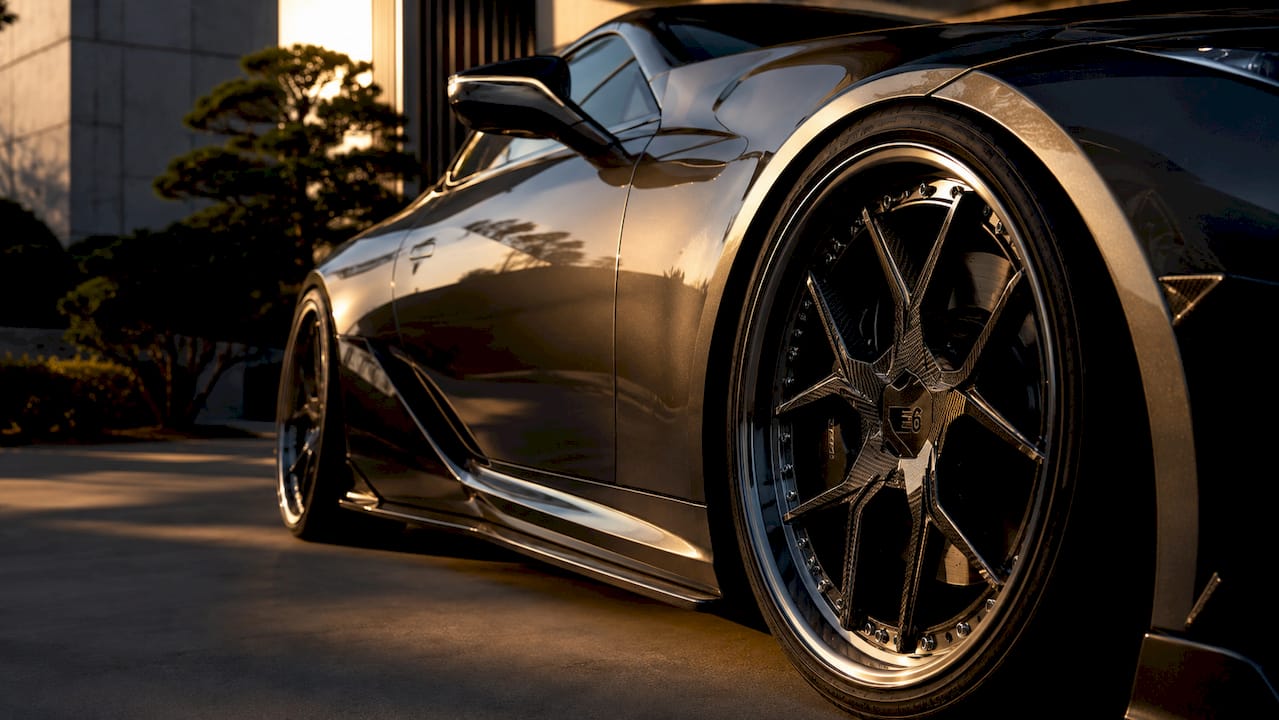
Multi-piece wheels use a forged center bolted to spun or forged outer barrels. They offer more sizing flexibility and easier repair if a barrel is damaged. The trade-off is slightly higher weight and more hardware to maintain. For track use, monoblock is the cleaner choice. For a show build where custom widths matter, multi-piece gives you more options.
| Construction | Strength | Weight | Repairability | Best use |
|---|---|---|---|---|
| Monoblock forged | Highest | Lowest | Limited | Track, street performance |
| Multi-piece forged | High | Moderate | High | Custom fitment, show builds |
| Flow-formed cast | Moderate | Moderate | Low | Budget performance |
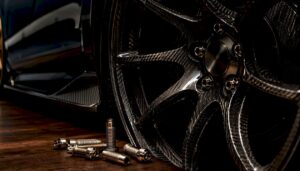
Carbon fiber composite wheels reduce unsprung weight further than forged aluminum, which improves suspension response and acceleration. Autoclave-cured carbon fiber construction produces the highest structural consistency. E6 Carbon uses autoclave-cured 2×2 twill carbon alongside forged aluminum to serve both track and street applications across McLaren, Lamborghini, and AMG platforms.
Pro Tip: For a Lexus LC500 used primarily on the street, a monoblock forged wheel in the 20×9 front and 20×10.5 rear configuration delivers the best balance of weight savings and daily durability without the cost premium of full carbon.
How does brake and suspension clearance affect wheel fitment?
Brake caliper clearance is the most commonly missed step in selecting luxury wheels. The “X-Factor” measurement describes the gap between wheel spokes and the outermost point of the brake caliper. On a Mercedes-AMG GT with Brembo six-piston front calipers, that gap can be as small as 4mm on an aggressive spoke design. Contact between a spoke and a caliper at speed is catastrophic.
Forged wheels solve part of this problem structurally. Their material strength supports thinner spokes, which creates more clearance without sacrificing integrity. But thinner spokes alone are not enough. You must measure from the hub face to the caliper’s outermost extremity and compare that to the wheel’s internal spoke geometry.
- Remove the wheel and measure from the hub face to the farthest caliper point using a depth gauge.
- Obtain the wheel manufacturer’s internal spoke clearance drawing or 3D model.
- Compare the two measurements with at least 5mm of margin.
- Confirm TPMS sensor compatibility. Most luxury platforms use a specific valve stem diameter and sensor body size. A wheel with a valve hole that is too small or incorrectly angled will not accept the OEM sensor.
- Verify lug nut seat type. Most AMG and McLaren wheels use a conical (60-degree) seat. Using a flat-seat lug nut on a conical seat wheel causes uneven clamping and potential loosening.
Hub-centric rings are a valid solution when the wheel’s center bore is slightly larger than the hub. They fill the gap and transfer load correctly. For McLaren and Lamborghini platforms, where tolerances are extremely tight, an OEM-matched bore is strongly preferred over rings.
Step-by-step process for specifying wheels on AMG, LC500, and McLaren
Specifying wheels for a premium platform is a sequential process. Skipping steps creates compounding errors that are expensive to fix after the wheel is mounted.
- Gather OEM specs. Pull the factory wheel size, bolt pattern, offset, center bore, and lug nut thread pitch from the vehicle’s service documentation. For a Mercedes-AMG E63, that baseline is typically 5×112, ET35, 66.6mm bore.
- Confirm bolt pattern and center bore. These two specs are non-negotiable. No adapter, no workaround.
- Select diameter and width. Choose based on your tire target. A wider wheel requires a wider tire. Going too wide on a Lexus LC500 rear without matching the tire width causes uneven wear and handling instability.
- Verify offset and backspacing. Proper offset keeps the wheel flush with the fender without pushing into the suspension. Use an offset calculator and cross-reference with the vehicle’s fender clearance.
- Measure brake caliper clearance. Use the X-Factor method described above. Do not skip this on any AMG or McLaren with upgraded brakes.
- Confirm lug nut type and TPMS placement. Order the correct seat-type lug nuts with the wheel. Confirm the valve stem angle works with your TPMS sensor body.
- Choose construction based on use. Track days favor monoblock forged. Street and show builds may benefit from multi-piece configurations for custom barrel widths.
- Order as an integrated package where possible. Integrated wheel and tire packages arrive mounted and road-force balanced, which eliminates the most common source of post-installation vibration. These packages can also save $150–$300 in local mounting and balancing labor.
- Dry-fit before final torque. Hand-thread all lug nuts, confirm seating, then torque in a star pattern to the manufacturer’s specification. Retorque after the first 50 miles.
Pro Tip: Always request a road-force balance reading after installation, not just a standard spin balance. Road-force balancing detects stiff spots in the tire that standard balancing misses, which matters most on low-profile performance tires.
Key Takeaways
Specifying high-end wheels correctly requires verifying bolt pattern, offset, center bore, brake clearance, and material construction in sequence before any purchase decision.
| Point | Details |
|---|---|
| Fitment parameters first | Confirm bolt pattern, center bore, offset, and backspacing before selecting diameter or style. |
| Brake clearance is critical | Measure the X-Factor gap between spokes and calipers on every AMG, LC500, and McLaren build. |
| Forged aluminum leads performance | Aerospace-grade 6061-T6 monoblock construction delivers the best strength-to-weight ratio for track and street use. |
| Integrated packages reduce risk | Road-force balanced wheel and tire packages eliminate post-installation vibration and save on labor costs. |
| Torque in a star pattern | Always torque lug nuts in a star sequence and retorque after the first 50 miles to prevent loosening. |
What most enthusiasts get wrong about wheel fitment
The most consistent mistake I see is treating wheel selection as a styling decision first and an engineering decision second. Enthusiasts spend hours on finish and spoke count, then order a wheel with an offset that pushes the tire into the inner fender on full lock. That is not a minor inconvenience. On a McLaren with active suspension geometry, incorrect offset changes the scrub radius and makes the car feel unpredictable at the limit.
The second most common error is ignoring TPMS compatibility until the wheel is already mounted. Every modern AMG, LC500, and McLaren relies on TPMS for tire pressure monitoring, and some systems will throw a fault code if the sensor is not seated at the correct angle or depth. Fixing this after the fact means dismounting the tire.
My honest recommendation: buy your wheels from a manufacturer who provides a 3D clearance model for your specific platform, not just a generic fitment chart. The difference between a chart and a model is the difference between “probably fits” and “confirmed fits.” For platforms like the Lamborghini Huracán or McLaren 720S, where caliper sizes are extreme and tolerances are tight, that confirmation is not optional. Integrated packages from manufacturers who specialize in these platforms are worth the premium because they remove the guesswork entirely.
— E6 Engineering
E6 Carbon forged wheels built for your platform
E6 Carbon engineers forged wheels specifically for Mercedes-AMG, Lexus LC500, McLaren, and Lamborghini platforms, with fitment data verified at the vehicle level, not the generic size level.
Every E6 Forged wheel ships with platform-specific offset, center bore, and brake clearance data. The monoblock and multi-piece configurations cover track builds and street builds equally, with construction tolerances that meet the demands of both. For enthusiasts who want the full picture on how tight tolerances translate to real-world ride quality and safety, the forged wheel tolerance guide covers the engineering behind every spec decision. Browse the complete E6 Forged wheel catalog to find the right configuration for your build.
FAQ
What bolt pattern does Mercedes-AMG use?
Most Mercedes-AMG models use a 5×112 bolt pattern with a 66.6mm center bore. Always confirm against your specific model year’s service documentation before ordering.
What is offset and why does it matter for luxury wheels?
Offset, marked as ET and measured in millimeters, determines how far the wheel sits inward or outward from the hub face. Incorrect offset causes fender rubbing, suspension contact, or an unsafe change in steering geometry.
Are monoblock or multi-piece wheels better for track use?
Monoblock forged wheels are the stronger choice for track use. They are machined from a single billet of 6061-T6 aluminum, which produces a lighter and more structurally consistent wheel than a multi-piece assembly.
What is the X-Factor in wheel fitment?
The X-Factor is the clearance measurement between a wheel’s spokes and the brake caliper. On performance cars with large calipers, this gap must be verified with a depth gauge before finalizing any wheel selection.
Do integrated wheel and tire packages really reduce vibration?
Yes. Integrated packages arrive pre-mounted and road-force balanced, which eliminates the most common source of post-installation vibration. They also remove the risk of improper mounting during local installation.