Most people assume a wheel is a wheel. Bolt it on, inflate the tire, and drive. But for anyone running a Ferrari on track, pushing a Lamborghini through canyon roads, or simply refusing to compromise on their BMW’s ride quality, that assumption falls apart fast. The difference between a mediocre wheel and a precision-engineered one often comes down to fractions of a millimeter. Tight tolerances of ±0.01 to 0.05 mm achieved through forging and CNC machining ensure perfect hub fitment, concentricity, and balance, directly reducing vibrations and improving high-speed stability. This article breaks down exactly why that obsession with precision matters, and what it means for your vehicle’s performance, safety, and style.
Table of Contents
- Precision engineering: What it means for wheels
- The science behind better performance
- How strength and safety are engineered
- When precision truly matters: Track days, EVs, and ultra-premium applications
- Is precision right for you? Daily drivers vs performance builds
- Explore precision-engineered wheels: Next steps for enthusiasts
- Frequently asked questions
Key Takeaways
| Point | Details |
|---|---|
| Millimeter precision matters | Tiny tolerance differences transform wheel safety, performance, and driving experience. |
| Performance and weight gains | Precision-forged wheels can cut up to 38% weight, improving acceleration, handling, and efficiency. |
| Strength and reliability | Forged wheels deliver up to 300% higher impact resistance versus cast designs for peace of mind. |
| Purpose-driven choice | Choose precision engineering for racing, electric, or luxury vehicles where every advantage counts. |
Precision engineering: What it means for wheels
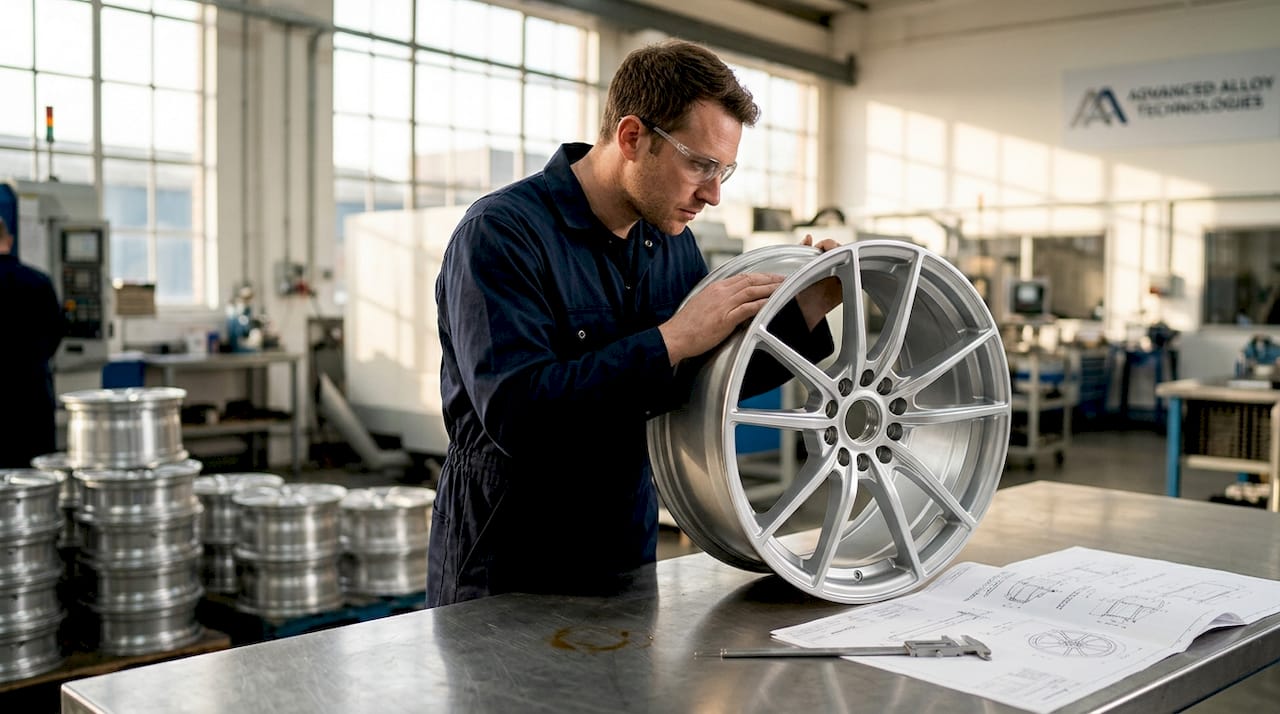
Precision engineering in wheel manufacturing is not a marketing phrase. It refers to a specific set of processes designed to hold extremely tight dimensional tolerances throughout production. Two methods define this space: forging and CNC machining.
Forging uses massive hydraulic presses to shape aluminum billets under intense pressure. The result is a wheel blank with a refined grain structure and zero porosity. CNC machining then removes material with computer-controlled precision, sculpting spoke geometry, hub bores, and bolt patterns to exact specifications. Together, these processes produce wheels that meet tolerances most cast wheels cannot touch.
Here is what precision engineering delivers in measurable terms:
- Hub bore accuracy within ±0.01 to 0.05 mm, eliminating play between wheel and hub
- Radial and lateral run-out below 0.3 mm, keeping the wheel perfectly true at speed
- Consistent bolt hole placement, preventing uneven clamping loads
- Repeatable spoke geometry across every unit in a production run
CNC multi-axis machining enables complex lightweight designs, including spoke pockets and undercuts, while maintaining the repeatability and structural integrity that safety demands. You cannot achieve that with a cast mold.
“The margin between a wheel that performs and one that fails at speed is often measured in hundredths of a millimeter. Precision is not optional at this level.”
For enthusiasts who want to understand how these standards apply to competition-grade hardware, our racing spec wheels guide covers the full picture. And if you are planning a fitment swap, the forged wheel installation guide walks through every critical step.
The science behind better performance
Precision engineering is not just about fitment. It directly shapes how your car accelerates, brakes, and corners. The key mechanism is mass reduction, specifically unsprung and rotational mass.
Forged wheels are 20 to 38% lighter than comparable cast wheels. That reduction in unsprung mass means your suspension can react faster to road inputs. Less rotational mass means the engine spends less energy spinning the wheels and more energy moving the car forward.
| Performance metric | Cast wheel | Forged wheel |
|---|---|---|
| Weight reduction vs. cast | Baseline | 20 to 38% lighter |
| Acceleration response | Standard | Noticeably sharper |
| Braking distance | Standard | Reduced |
| Steering feedback | Moderate | Highly responsive |
| Heat dissipation | Average | Superior |
The lap time data backs this up. BBS reports a 2 to 3% improvement in lap times when switching from cast to forged wheels, a figure that translates to multiple seconds on a typical circuit. For track day regulars, that is not a marginal gain.
Thermal performance is another underrated benefit. Precision-machined spoke geometry improves airflow to the brake rotors, which matters enormously for both racing applications and electric vehicles running regenerative braking systems.
Pro Tip: Even shaving 1 to 2 kg per corner from your unsprung mass produces a handling improvement you will feel immediately, especially in tight corners and under hard braking.
For a deeper look at what these gains mean in real driving conditions, explore our breakdown of performance gains with racing wheels. If you are considering carbon fiber options, the carbon fiber wheel benefits article separates fact from fiction. And for a visual and engineering perspective, wheel design and performance is worth your time.
How strength and safety are engineered
Performance gains mean nothing if the wheel fails. This is where forging’s structural advantages become critical.
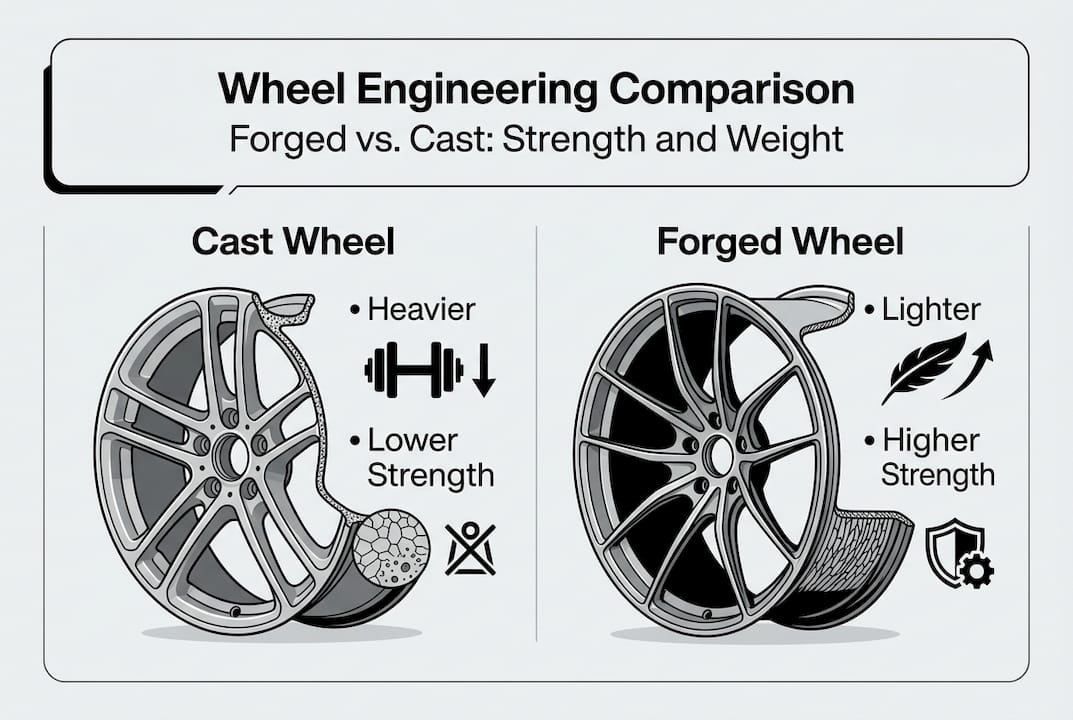
Forging aligns the aluminum’s grain structure under pressures of 6,000 to 12,000 tons, eliminating the porosity that weakens cast wheels. The result is tensile strength in the range of 275 to 330 MPa, which is 30 to 300% higher than typical cast aluminum. Impact resistance improves by up to 3x.
| Property | Cast wheel | Forged wheel |
|---|---|---|
| Tensile strength | 150 to 200 MPa | 275 to 330 MPa |
| Impact resistance | Baseline | Up to 3x higher |
| Porosity | Present | Eliminated |
| Fatigue life | Moderate | Significantly extended |
Precision fitment also prevents a failure mode that many enthusiasts overlook: bearing damage from improper hub contact. When a wheel’s bore is even slightly off-center, the load transfers unevenly to the wheel bearing. Over time, this causes premature wear and, in severe cases, catastrophic failure at speed.
Key risk reductions from precision engineering include:
- Elimination of micro-vibrations that initiate fatigue cracks in spokes
- Proper hub-centric contact that distributes load evenly across the bearing
- Consistent bolt hole geometry that prevents uneven torque and stud stress
- Reduced susceptibility to impact damage from road hazards
For standards-based context on what these specs mean in practice, our racing spec safety standards resource is a solid reference. When you are ready to make a purchase decision, the guide on selecting safe performance wheels helps you filter by what actually matters.
When precision truly matters: Track days, EVs, and ultra-premium applications
Not every driver needs a wheel machined to aerospace tolerances. But in three specific scenarios, precision is not optional.
Track and racing use. At sustained high speeds, even minor imbalance creates vibration that fatigues components and degrades tire contact. Precision prevents vibration-induced bearing failure and maintains consistent tire contact under high lateral loads. A DNF caused by wheel vibration at 150 mph is not a theoretical risk.
Electric vehicles. EVs carry heavier battery packs and deliver instant, full torque from a standstill. Both factors stress wheel bearings and hubs far more than a comparable combustion engine vehicle. Precision fitment extends component life and preserves efficiency by reducing rolling resistance from misalignment.
Ultra-premium luxury vehicles. Owners of McLarens, Ferraris, and high-spec Mercedes-AMG builds have zero tolerance for vibration or visual imperfection. A wheel that is even slightly out of true ruins the experience. Precision engineering is the only way to meet that standard consistently.
Pro Tip: Any time you swap wheels on a hub-centric vehicle, verify that the bore diameter matches your hub exactly. A hub-centric ring can compensate for minor differences, but it is not a substitute for a properly spec’d wheel.
For enthusiasts exploring custom fitment options, our guide on customized performance wheels covers the full range of possibilities. The matching wheels to cars guide helps you nail fitment for your specific platform, and wheel finish insights rounds out the aesthetic side of the decision.
Is precision right for you? Daily drivers vs performance builds
Here is the honest answer: cast wheels are sufficient for most daily driving scenarios where cost is the primary concern and marginal performance gains are not a priority. If you are commuting in a standard sedan and never push the car beyond normal road use, a quality cast wheel does the job.
But if any of the following apply to you, precision-forged wheels are worth the investment:
- You track your car, even occasionally
- You drive a high-performance or luxury vehicle where ride quality is non-negotiable
- Your vehicle is an EV with a heavy battery pack and high torque output
- You care about wheel aesthetics and want flawless finish consistency
- You plan to run wide, sticky tires that demand perfect balance
- You want a wheel that holds its value and structural integrity long-term
The decision is not purely about speed. It is about matching the engineering of your wheels to the demands you place on them. A Lamborghini Huracan deserves better than a cast wheel that introduces vibration at 80 mph. So does a track-prepped Nissan GT-R or a show-quality BMW M3.
Proper fitment matters regardless of which direction you go. Even the best forged wheel underperforms if it is not correctly matched to your hub. For a look at what premium options are available across different vehicle platforms, our premium carbon wheel options page is a strong starting point.
Explore precision-engineered wheels: Next steps for enthusiasts
If this breakdown has made one thing clear, it is that the engineering behind your wheels shapes everything from lap times to long-term reliability. At E6 Carbon and E6 Forged, every wheel we produce is built to the tolerances this article describes, not as a selling point, but because that is what high-performance vehicles demand.

Our AR03 multipiece wheels represent exactly what precision manufacturing looks like in a finished product: lightweight, structurally superior, and visually striking. Before you install any new set, run through our safety inspection for forged wheels checklist to confirm everything is within spec. And when you are ready to mount up, the forged wheel installation guide ensures the job is done right the first time.
Frequently asked questions
What are the practical benefits of precision wheels for daily driving?
Precision wheels offer better balance and a smoother ride, but the most significant gains appear in high-performance or luxury vehicles where cast wheels fall short of the required standards.
How much does precision engineering reduce wheel weight?
Precision-forged wheels are 20 to 38% lighter than cast equivalents, which directly improves acceleration response, braking distance, and handling feel.
Do all luxury cars need precision-engineered wheels?
Luxury vehicles benefit most because their owners demand zero vibration and flawless appearance. Precision prevents vibration that would compromise both comfort and aesthetics at any speed.
How do I know if my wheels are precision-engineered?
Check the manufacturer’s specs for tolerance figures and look for confirmation of forging or CNC machining in the product details. Tolerances down to 0.01 mm are a reliable indicator of genuine precision manufacturing.
Can precision engineering help with electric vehicle performance?
Yes. EVs place extra stress on hubs and bearings due to battery weight and instant torque delivery. Precision prevents bearing failure and reduces rolling resistance caused by fitment imprecision, improving both efficiency and component longevity.