
TL;DR:
- Modern wheel trends favor subtle, aerodynamically efficient designs over aggressive concavity.
- Deep concave wheels can cause brake clearance issues and increase manufacturing costs.
- Choosing the right wheel depends on vehicle purpose, engineering, and fitment, not just aesthetics.
The assumption that deeper concave wheels always look better and perform harder is one of the most persistent myths in car culture. Walk through any enthusiast forum and you’ll see builds praised almost exclusively for how aggressively the spokes dish inward, as if concavity depth were the only metric that matters. But 2025 wheel design trends tell a different story: the luxury and high-performance markets are actively moving toward subtler, more aero-efficient profiles. This guide breaks down exactly what wheel concavity is, why it matters, and how to choose the right depth for your specific build.
Table of Contents
- Understanding wheel concavity: Core concepts and definitions
- How concavity affects fitment, performance, and style
- Concave wheels and vehicle trends: What’s changing in 2026?
- Safety, strength, and common fitment pitfalls
- Concave, multi-spoke, and custom options: Benefits and tradeoffs
- The uncomfortable truth about wheel concavity: Chasing trends vs. real benefit
- Explore premium wheel solutions: Next steps for enthusiasts
- Frequently asked questions
Key Takeaways
| Point | Details |
|---|---|
| Concavity defined | Wheel concavity refers to how much spokes curve inward from the rim to the center hub. |
| Performance and fitment | Deeper concavity may enhance appearance but can restrict brake clearance and hinder performance fitment. |
| Trends shifting | Luxury and electric vehicles are favoring subtle concavity or flat wheel faces for efficiency and aesthetics. |
| Safety first | Always verify load rating and fitment; excessive concavity can weaken wheels if poorly engineered. |
| Purpose-driven selection | Choose wheel designs based on your actual driving needs, not just looks or fleeting trends. |
Understanding wheel concavity: Core concepts and definitions
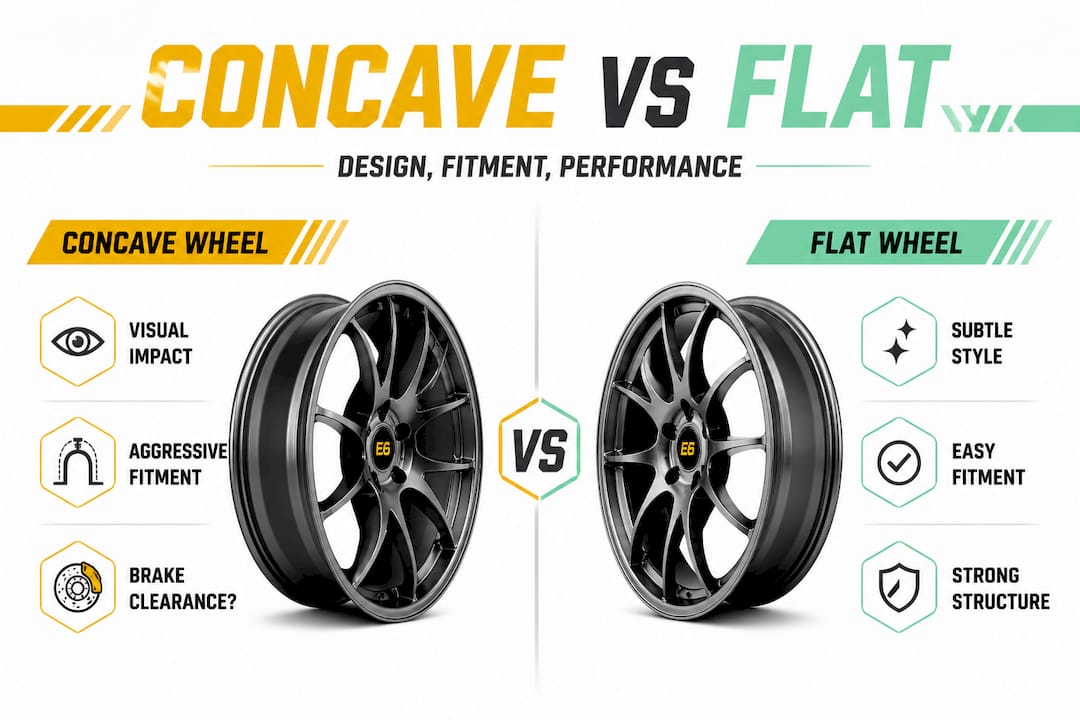
Wheel concavity describes the inward curvature of a wheel’s face, specifically how far the spokes angle back toward the hub relative to the outer lip. Think of it like the difference between a shallow bowl and a deep soup bowl. The deeper the dish, the more dramatic the concavity. This is not just a visual preference; it directly affects how a wheel interacts with your car’s suspension geometry, brake components, and fender clearance.
There are three primary spoke profile categories you need to understand before you start shopping:
- Concave: Spokes curve inward toward the hub, creating a recessed center face. This is the look most associated with aggressive fitment and stance culture.
- Flat: Spokes run roughly parallel to the wheel’s mounting plane. Common on OEM wheels and increasingly popular in modern luxury and EV applications.
- Convex (or stepped): Spokes angle outward toward the lip, creating a forward-protruding face. Less common but used in specific retro and motorsport applications.
| Profile type | Visual effect | Fitment flexibility | Typical application |
|---|---|---|---|
| Deep concave | Dramatic, aggressive | Limited by brake kits | Stance builds, show cars |
| Subtle concave | Refined, athletic | Moderate | Street performance, luxury |
| Flat | Clean, minimal | High | EVs, luxury, OEM-style |
| Convex | Bold, retro | Moderate | Classic builds, some motorsport |
Understanding wheel design impact goes well beyond aesthetics. The profile you choose shapes how your car sits visually, how air moves around the wheel well, and critically, whether your chosen wheel will even clear your brake setup. One often-overlooked edge case: large brake kits limit concavity on the front axle, forcing flatter faces, while EVs reduce the need for deep concave profiles entirely due to their minimal brake cooling requirements. This shift is pushing the entire industry toward subtle monoblock minimalism.
How concavity affects fitment, performance, and style
Having defined the profiles, the next question is how these design choices play out in real-world use, especially for enthusiasts chasing a specific stance or track setup.
Concavity depth directly influences how far the wheel face sits relative to your fender lip. A deeper concave face, combined with a wide lip, creates that flush or poke look that stance culture celebrates. But there is a mechanical reality underneath the visual drama. The deeper the concave face, the less physical space remains between the inner spokes and your brake caliper. On a track build running a big brake kit, this is not a stylistic consideration; it is a hard engineering constraint.
Here is a practical breakdown of how concavity depth affects your build:
- Brake clearance: Deep concave wheels can physically contact big brake calipers, especially on the front axle where calipers are largest. Always measure caliper height and depth before selecting a concave profile.
- Spoke stress distribution: Deeper concavity means longer spoke runs, which changes how load transfers through the wheel under cornering and braking forces.
- Cooling airflow: Traditional combustion-engine builds benefit from open spoke designs that channel air toward rotors. EVs generate far less brake heat, making this less relevant.
- Cleaning and maintenance: Deep concave barrels trap brake dust and road grime in ways flat faces simply don’t. For show cars, this means more detailing time.
- Cost of manufacture: Deep concave profiles require more complex forging and machining processes, which drives up cost significantly compared to subtle or flat designs.
| Design | Performance benefit | Fitment risk | Relative cost |
|---|---|---|---|
| Deep concave | High visual stance impact | High (brake clearance issues) | Premium |
| Subtle concave | Balanced look and function | Low to moderate | Moderate |
| Flat | Aero efficiency, easy fitment | Very low | Standard |
Pro Tip: Before committing to any concave wheel, consult a detailed fitment guide specific to your vehicle platform. Pair this with a physical caliper measurement. No calculator replaces hands-on verification, especially if you’re running upgraded performance brake systems that differ from stock dimensions.
The performance benefit of concavity is often overstated in forums. Stance and grip are not the same thing. A wheel’s grip comes from tire compound, contact patch, and suspension geometry, not from how deep the face dishes inward. Concavity is primarily an aesthetic and fitment consideration, with secondary structural implications.

Concave wheels and vehicle trends: What’s changing in 2026?
Now that you understand how concavity works mechanically, it’s worth paying attention to where the market is heading. Choosing a wheel design that looks dated in two years is a real risk, especially at the price points enthusiasts invest in premium forged sets.
The clearest signal in 2026 is the luxury and EV market’s decisive move away from aggressive concavity. Several forces are driving this:
- EV architecture: Electric vehicles have smaller, less heat-intensive brake setups. The functional argument for open, deeply concave multi-spoke wheels simply doesn’t apply the same way it does to a high-revving combustion engine.
- Aerodynamic efficiency: Automakers and aftermarket brands alike are prioritizing wheel designs that reduce drag. Flat or subtly concave monoblock faces are aerodynamically cleaner than deeply dished multi-spoke designs.
- Luxury brand influence: Brands like Rolls-Royce, Bentley, and even performance-focused marques like McLaren are specifying cleaner, more minimal wheel faces as standard. This filters down into the aftermarket.
- The monoblock resurgence: Single-piece forged wheels with subtle face geometry are seeing renewed demand. They’re lighter, structurally efficient, and visually sophisticated without relying on aggressive depth for impact.
The shift toward subtle monoblock minimalism is not just a styling preference. It reflects genuine engineering priorities in modern high-performance vehicles, where every gram of unsprung weight and every fraction of aerodynamic drag matters at speed.
Stat callout: Industry observers tracking design transformation in the aftermarket note that demand for deeply concave multi-piece wheels has softened noticeably since 2023, while interest in clean monoblock and AeroDisc-style designs has grown across luxury and track-focused segments.
What does this mean for your build? If you’re building a combustion-engine sports car for street and occasional track use, a subtle to moderate concave profile still makes strong visual and functional sense. If you’re upgrading an EV or a luxury GT car, a cleaner, flatter face will look more intentional and age better over time.
Safety, strength, and common fitment pitfalls
With new trends come new temptations to push limits. Here’s how to make sure your wheel choice is as safe as it is striking.
The structural integrity of a concave wheel depends on how the manufacturer manages material thickness across the spoke face. Pushing for maximum concavity without accounting for stress concentration points is where builds go wrong. A wheel that looks incredible on a spec sheet can develop fatigue cracks at the spoke roots if the design sacrifices material thickness for visual drama.
“Poor design thins stress areas, compromising strength despite looks. Always verify load rating, PCD, center bore and use fitment calculators before purchasing any concave wheel.”
Follow this step-by-step process before finalizing any wheel purchase:
- Confirm load rating: Every wheel has a rated load capacity. Your vehicle’s gross axle weight rating (GAWR) must fall within this spec. Don’t assume a premium-looking wheel is automatically rated for your car’s weight.
- Verify bolt pattern (PCD): Pitch circle diameter must match your hub exactly. An adapter might seem like a solution, but it introduces additional failure points under hard driving.
- Check center bore: The wheel’s center bore must match or exceed your hub bore. Wheel-centric fitment is always preferable to lug-centric for high-performance applications.
- Measure brake caliper clearance: Use a physical template or 3D scan of your caliper to confirm clearance against the wheel’s inner face geometry.
- Use multiple fitment calculators: No single tool is definitive. Cross-reference at least two calculators and verify results against manufacturer data.
Pro Tip: When matching wheels safely to a performance platform, always request the manufacturer’s load testing certification and ask specifically whether the design was tested at your intended offset and width combination. These variables change how stress distributes through the spoke structure.
The most common mistake enthusiasts make is selecting a wheel based on photos alone, then retrofitting the fitment math afterward. The right process runs in reverse: establish your fitment envelope first, then find the most visually compelling wheel that fits within it.
Concave, multi-spoke, and custom options: Benefits and tradeoffs
With the technical and trend context established, it’s worth examining the practical upsides and real drawbacks of the most popular wheel styles in today’s car culture.
Distinct advantages of concave and multi-spoke designs:
- Strong visual depth that photographs exceptionally well, particularly with wide-body fitment
- Open spoke structure improves brake cooling on combustion-engine builds
- Multi-piece construction allows custom barrel widths and offsets, maximizing fitment precision
- Status signal in car culture: a well-executed deep concave set still commands attention at shows and meets
- Structural versatility: carbon wheel types and forged aluminum options allow significant weight savings even in complex concave profiles
Real drawbacks that forums rarely discuss:
- Deep concave profiles carry a manufacturing premium that can add hundreds of dollars per wheel compared to subtle alternatives
- Brake dust accumulation in the barrel is genuinely difficult to clean without specialized tools
- Fitment compatibility drops significantly as concavity increases, limiting your options across vehicle platforms
- Trend sensitivity is real: aggressive concavity that looked cutting-edge in 2020 reads differently in 2026
Multi-piece wheels offer a compelling middle ground. The ability to independently specify barrel depth, face profile, and offset means you can dial in the exact visual and functional result without compromising on either. Custom builds using wheel customization approaches can achieve meaningful weight reductions, sometimes up to 40%, while maintaining the structural integrity that track use demands.
Pro Tip: Match your wheel design to your actual driving profile. A show car and a track car have completely different priority hierarchies. If you run your car hard on circuit, explore racing wheel upgrades that prioritize stiffness-to-weight ratio and brake clearance over visual drama. If it’s primarily a street and show build, you have more freedom to chase aesthetics.
The uncomfortable truth about wheel concavity: Chasing trends vs. real benefit
Here’s something the enthusiast community rarely says out loud: most of the obsession with aggressive concavity is about social validation, not performance. The forums reward dramatic builds. Deep concave, wide lip, aggressive fitment gets more likes. That feedback loop has convinced a generation of builders that deeper always means better.
It doesn’t. And in 2026, it increasingly doesn’t even mean current.
The vehicles that are genuinely pushing performance boundaries right now, whether that’s a track-prepped GT3 or a high-output EV, are not running the deepest concave faces available. They’re running wheels engineered for stiffness, weight, and clearance. The visual drama is a byproduct of proper engineering, not the goal.
We’ve seen builds where the owner spent a significant portion of their wheel budget chasing a specific concavity depth, only to discover it wouldn’t clear their brake upgrade, or that the spoke geometry introduced flex under hard cornering. These are expensive lessons that proper engineering review would have prevented.
The emerging chassis technology in high-performance EVs and modern sports cars is making aggressive concavity increasingly irrelevant from a functional standpoint. Regenerative braking reduces rotor heat dramatically, eliminating the cooling argument for open deep-dish designs. Wider track widths and lower-profile tires change the visual math on what looks proportional.
Our honest recommendation: let your build’s actual purpose define your wheel geometry. Study wheel finish insights and engineering specs before you study Instagram. A wheel that fits your car perfectly, clears your brakes, and complements your build’s purpose will always look better than a wheel chosen for depth alone.
Explore premium wheel solutions: Next steps for enthusiasts
You now have the knowledge to make a genuinely informed wheel decision, one based on engineering, fitment, and purposeful design rather than trend-chasing.

At E6 Carbon and E6 Forged, we build wheels for enthusiasts who want to get this right. Our range spans monoblock, multi-piece, and AeroDisc designs, each engineered to specific performance and fitment standards for platforms including BMW, Ferrari, Lamborghini, McLaren, and more. Before you commit to any purchase, start with a thorough forged wheel inspection checklist and work through our detailed wheel upgrade guide to match the right design to your build. If you’re ready to explore a specific product, our AR03 multipiece wheels represent exactly the kind of precision-engineered, visually refined design that performs as well as it looks.
Frequently asked questions
What is the main difference between concave and flat wheels?
Concave wheels have spokes that angle inward toward the center hub, creating a recessed face, while flat wheels have spokes that run nearly straight out from the rim. The shift toward flat profiles in EVs and luxury vehicles reflects both aerodynamic and aesthetic priorities.
Can you use deep concave wheels with big brake kits?
Deep concave wheels frequently interfere with big brake calipers, especially on the front axle, so flatter designs are often required for proper clearance. Large brake kits limit concavity significantly, making physical measurement essential before purchase.
Are concave wheels less safe than other designs?
Concave wheels are safe when properly engineered, but extreme concavity can thin spoke stress areas and compromise overall structural strength. Always confirm that load rating and fitment specs match your vehicle’s actual requirements.
Why are luxury and electric vehicles moving away from deep concave wheels?
Luxury and EV designs prioritize subtle, aero-efficient wheels since there’s less need for brake cooling and a stronger emphasis on minimalist, aerodynamically clean styling.
What technical checks are most critical before buying concave wheels?
Always confirm load rating, bolt pattern (PCD), and center bore before purchasing. Cross-reference fitment calculators and load specs using at least two independent tools, and verify results against the manufacturer’s certified data.
Recommended
- How wheel design transforms vehicle aesthetics and performance
- What Is Wheel Customization? 40% Weight Reduction in 2026
- Why upgrade to racing wheels: performance gains 2026
- Performance wheel finish guide: 2026 insights for enthusiasts
- Go-kart tires: The real key to performance and safety – GoKarts USA®
- Why and How to Rotate Tires: Utah Car Buyers Guide 2025 | ReVroom