TL;DR:
- Enhancing luxury cars involves deliberate upgrades like forged wheels and carbon fiber parts that improve both style and function. Proper assessment, paint correction, surface protection, and precise installation are essential to avoid costly mistakes and ensure lasting aesthetics. Thoughtful integration of design and technology transforms luxury vehicles into cohesive, visually striking, and durable masterpieces.
If you own a Ferrari, Lamborghini, or Mercedes-AMG, you already know the frustration: the car looks extraordinary from the factory, yet something still feels unfinished. Learning how to enhance luxury car aesthetics is less about chasing trends and more about making deliberate, high-quality choices that elevate both form and function simultaneously. Forged wheels and carbon fiber parts are the two upgrades that consistently deliver the most visible transformation without compromising the engineering standards your car was built to meet. This guide walks you through every step, from assessing your baseline to protecting your investment long-term.
Table of Contents
- Assessing your luxury car’s current aesthetic and performance state
- Preparing your vehicle: paint correction and protecting surfaces
- Choosing and installing forged wheels for style and performance
- Integrating carbon fiber parts: selection, protection, and care
- Step-by-step enhancements summary and troubleshooting common mistakes
- Why traditional luxury car modifications are evolving with design and tech
- Explore premium forged wheels and carbon fiber parts at E6Carbon
- Frequently asked questions
Key Takeaways
| Point | Details |
|---|---|
| Assess current condition | Begin by evaluating your car’s paint and wheel condition to identify needed upgrades and avoid surprises. |
| Prepare with correction | Professional paint correction restores shine and ensures protective coatings adhere optimally. |
| Select quality forged wheels | Choose forged wheels that balance style, correct fitment, and performance requirements. |
| Protect and maintain carbon fiber | Use PPF and ceramic coatings on carbon fiber parts to guard against UV damage and keep them looking new. |
| Avoid common mistakes | Follow expert installation and maintenance tips to preserve your investment and achieve lasting luxury aesthetics. |
Assessing your luxury car’s current aesthetic and performance state
Before you buy a single wheel or carbon fiber panel, take an honest look at where your car stands today. Most owners skip this step and end up layering expensive upgrades over problems that will surface later.
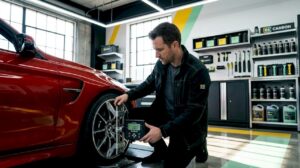
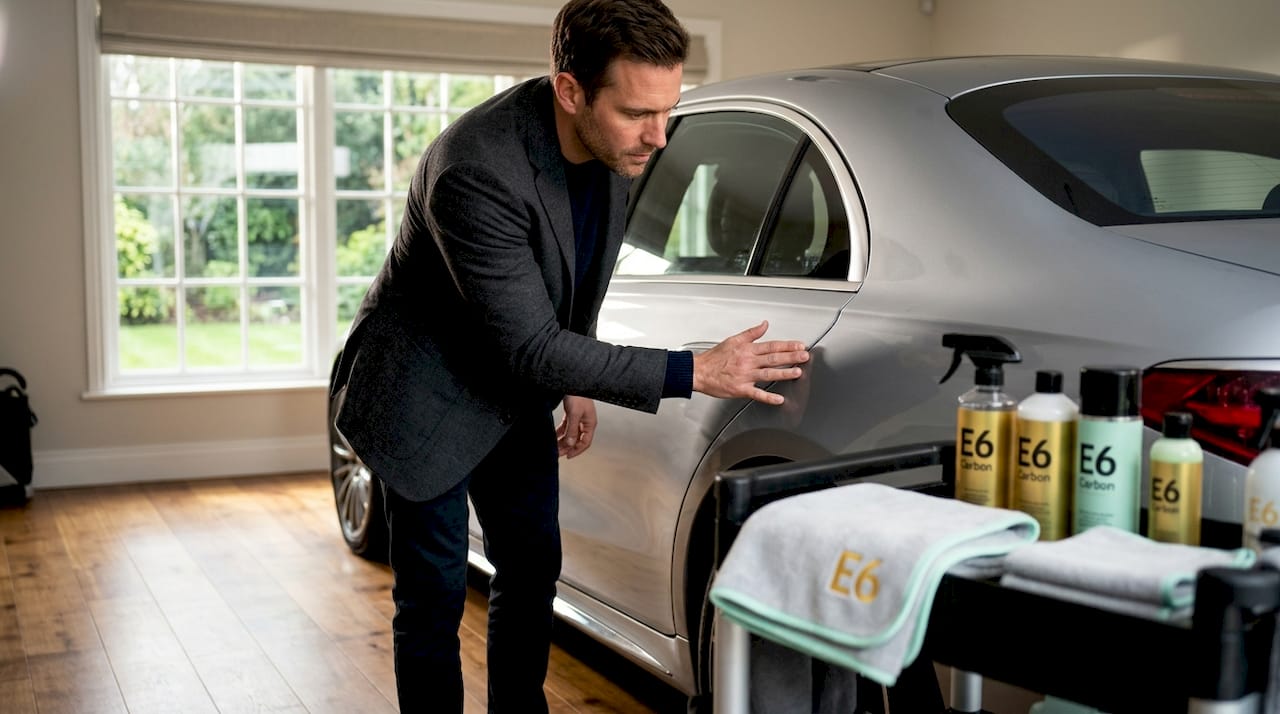
Start with paint. New vehicles can arrive with transport marring or swirls that are invisible in a garage but glaring under direct sunlight. Run your fingertips across painted surfaces and check under natural light at a low angle. Even a six-month-old supercar can have micro-scratches from improper washing.
Next, inspect your wheels. The questions that matter most are fitment accuracy, load rating relative to your car’s weight, and finish durability under brake dust and road chemicals. A wheel that looks good in photos but runs the wrong offset will rub against bodywork and create a safety issue.
Finally, identify which carbon fiber parts on your car are already exposed to UV. Roof panels, mirrors, and spoilers face the harshest sun exposure. Upgrading car exterior and interior style becomes far more effective once you know exactly which surfaces need attention first.
Quick condition checklist:
- Paint gloss level and depth under direct sunlight
- Presence of swirl marks, oxidation, or water spots
- Wheel offset, diameter, and load rating compatibility
- Carbon fiber finish condition (yellowing, clouding, or delamination)
- Condition of rubber tire sidewalls and brake caliper hardware
| Assessment area | What to look for | Priority level |
|---|---|---|
| Paint surface | Swirls, marring, oxidation | High |
| Wheel fitment | Offset, bolt pattern, diameter | High |
| Carbon fiber parts | UV yellowing, resin clouding | Medium |
| Interior trim | Fading, cracking, discoloration | Medium |
| Brake hardware | Dust buildup, corrosion | Low |
Preparing your vehicle: paint correction and protecting surfaces
With your vehicle’s condition assessed, the next step is preparing its surfaces for lasting aesthetic upgrades through paint correction and protection.
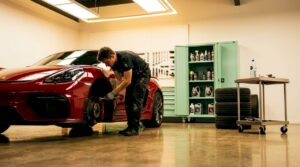
Paint correction is not optional if you want your final result to look truly flawless. Paint correction removes swirl marks and restores gloss depth, with the process costing between $300 and $2,500 depending on severity, and taking one to three days. A professional detailer will use a machine polisher with progressively finer compounds to eliminate defects before any protective layer goes on.
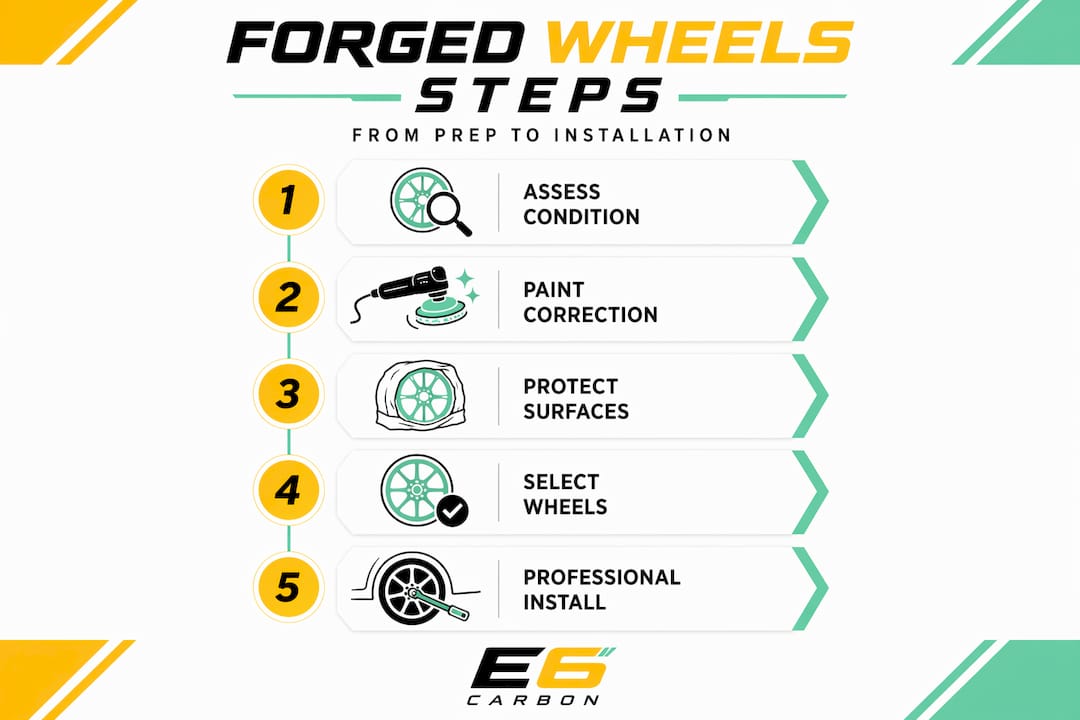
Follow a logical sequence to protect surfaces properly:
- Decontaminate the paint with an iron remover and clay bar to pull embedded particles from the clear coat
- Correct the paint through a one to three stage machine polishing process, matched to your defect severity
- Apply PPF on high-impact zones including the front bumper, hood edges, mirror housings, and all carbon fiber components
- Apply ceramic coating over the entire vehicle, including on top of the PPF, for a hydrophobic and UV-resistant layer
Applying PPF blocks 99% of UV rays and lasts five to seven years, while ceramic coatings block 95% of UV and remain effective for two to five years depending on maintenance frequency. Running both together is the standard approach for high-end car protection.
Pro Tip: Always correct paint before applying PPF. Film adheres to whatever surface it covers, and any swirls or defects trapped underneath become permanent until the film is removed.
What to avoid during preparation:
- Using rotary polishers without experience on thin factory clear coats
- Applying PPF in cold or humid conditions, which prevents proper adhesion
- Skipping the clay bar step, which leaves contaminants bonded under protective film
- Rushing the ceramic coating cure time, which requires 24 to 48 hours without water exposure
| Protection method | UV blocking | Lifespan | Best application |
|---|---|---|---|
| Paint protection film | 99% | 5 to 7 years | High-impact panels, carbon fiber |
| Ceramic coating | 95% | 2 to 5 years | Full vehicle, over PPF |
| Traditional wax | 60 to 70% | 3 to 6 months | Maintenance top-up only |
Choosing and installing forged wheels for style and performance
Once your vehicle’s surfaces are ready, selecting the right forged wheels will define your car’s stance and handling.
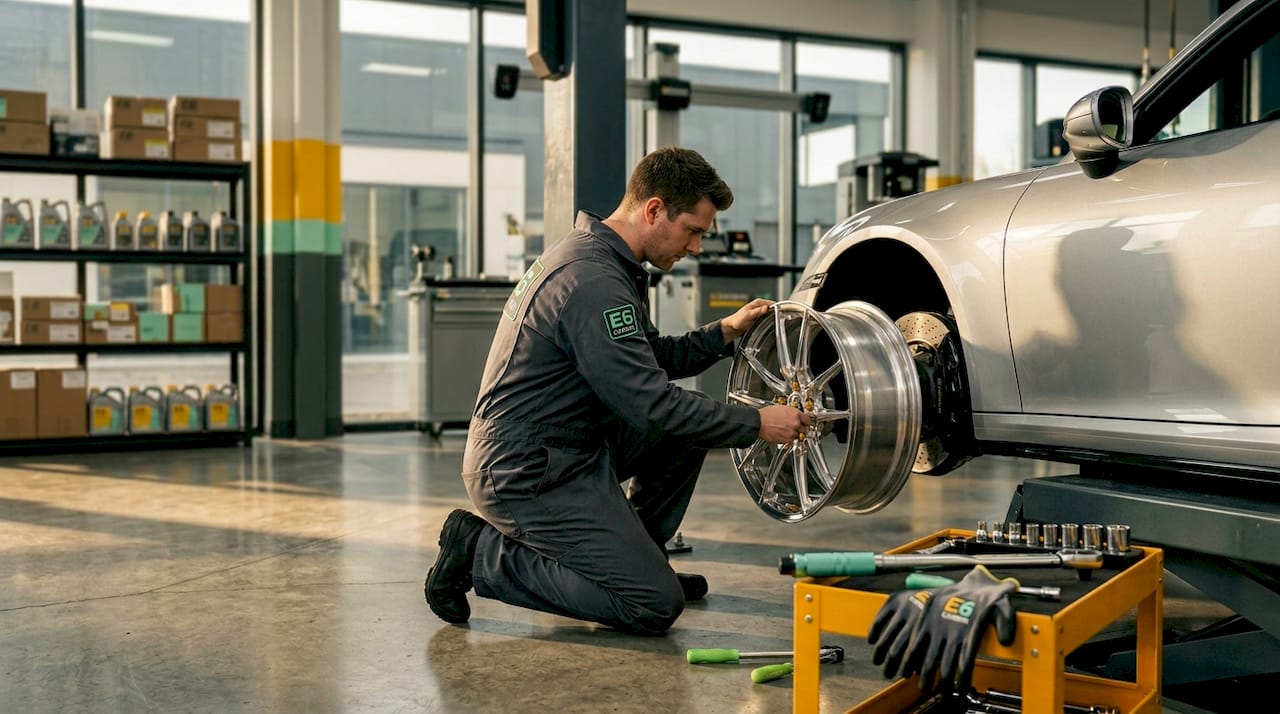
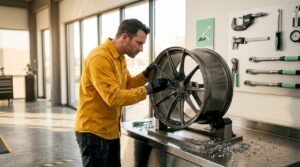
Understanding construction types matters before you spend money. Monoblock forged wheels are machined from a single aluminum billet, making them extremely strong and light, ideal for track or aggressive street use. Two-piece wheels combine a forged center with a spun or forged outer barrel, offering more customization in width and offset. Three-piece wheels go further, with a bolted barrel assembly that lets you adjust width and depth independently. Forged alloy wheels offer superior strength and reduced weight compared to cast alternatives, directly improving handling response and reducing unsprung mass.
Matching wheel specs to your specific car is where most people make expensive errors. Every dimension matters.
Critical specifications to verify:
- Bolt pattern (PCD): must match your hub exactly, no adapters on track cars
- Center bore: hub-centric fit eliminates vibration at high speed
- Offset (ET): controls how far the wheel sits inward or outward in the arch
- Width and diameter: affects tire sizing, speedo calibration, and clearance
- Load rating: must exceed your vehicle’s corner weight with a safety margin
Pro Tip: Before finalizing a wheel order, physically check your caliper clearance. Many high-performance calipers require a minimum spoke clearance that varies by wheel brand, and this spec is rarely printed in the manufacturer’s standard fitment guide.
Always have forged wheels mounted, torqued, and balanced by a shop with a Hunter Road Force balancer or equivalent. Standard static balancing is insufficient for large diameter wheels above 20 inches.
| Wheel construction | Weight | Customization | Best use |
|---|---|---|---|
| Monoblock forged | Lightest | Limited offset/width options | Track and performance street |
| Two-piece forged | Light | Moderate width range | Luxury street and show |
| Three-piece forged | Slightly heavier | Maximum customization | Show cars and bespoke builds |
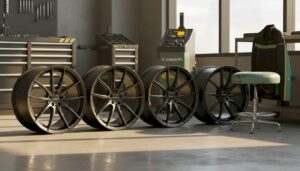
Pairing the right construction type with the right finish, whether a brushed concave face, deep-lip polished barrel, or matte anthracite, is where wheel design transforms vehicle aesthetics from generic to genuinely distinctive. Once you know your priorities, explore custom forged wheel options that are engineered specifically for your platform.
Integrating carbon fiber parts: selection, protection, and care
After upgrading your wheels, incorporating and caring for carbon fiber parts ensures your car maintains its premium look under all conditions.
Not all carbon fiber is equal. Genuine high-quality carbon fiber uses aerospace-grade resin systems with UV stabilizers built into the clear coat. Low-cost alternatives use cheaper resins that yellow within 12 to 18 months of outdoor exposure. When evaluating parts, look for a consistent weave pattern (2×2 twill is most common and visually sharpest), no visible pinholes in the resin surface, and a clear coat that passes the thumbnail test without flexing.
UV rays cause yellowing and deterioration in carbon fiber parts that lack adequate protection, which is why the best performance carbon fiber parts are specified with UV-resistant clear coats from the factory, not as an afterthought.
How to maintain carbon fiber parts correctly:
- Wash with pH-neutral car shampoo only. Acidic or alkaline cleaners break down clear coat chemistry faster on carbon fiber than on painted panels
- Rinse thoroughly after any exposure to road salt, which accelerates resin degradation
- Inspect the clear coat every three months under direct sunlight for any cloudiness or orange peel developing
- Apply a fresh ceramic spray coat every six months on exposed carbon fiber surfaces as a top-up layer
- Address any stone chips or clear coat breaches immediately with spot repair to prevent moisture ingress
Pro Tip: Never take a car with exposed carbon fiber through an automated car wash. The high-alkaline soaps and rotating brushes accelerate clear coat failure by 40 to 60% faster than hand washing.
What to look for when selecting carbon fiber parts:
- Full carbon construction versus fiberglass with carbon wrap overlay
- Whether the part is OEM fitment or requires modification for proper mounting
- Clear coat type (UV-stabilized acrylic or UV-cured polyurethane are best)
- Availability of replacement mounting hardware and documented installation instructions
Exploring the range of custom carbon fiber upgrades available for your specific platform helps you match parts that complement your wheel selection rather than compete with it visually.
Step-by-step enhancements summary and troubleshooting common mistakes
To wrap up, here’s a detailed summary and expert tips to avoid costly mistakes as you enhance your luxury car’s aesthetics.
The complete enhancement sequence:
- Assess paint, wheel fitment, and carbon fiber condition
- Perform paint decontamination and correction
- Apply PPF on high-impact zones and all carbon fiber panels
- Apply ceramic coating over the full vehicle
- Select and install forged wheels with verified specs
- Install carbon fiber components with proper mounting torque
- Establish a maintenance schedule for coatings and surfaces
A luxury car’s aesthetics are only as good as the maintenance behind them. The upgrade is the beginning, not the destination.
| Common mistake | Consequence | Prevention |
|---|---|---|
| Wrong wheel offset | Rubbing, steering pull | Verify ET spec before ordering |
| Over-polishing paint | Clear coat thinning | Measure paint depth before correction |
| Skipping PPF on carbon fiber | UV yellowing within a year | Apply PPF as a first step on all carbon |
| Automatic washes on matte PPF | Streaking and damage | Hand wash only with pH-neutral soap |
Pro Tip: Invest in a paint depth gauge before any polishing work. Factory clear coats on luxury cars typically measure 100 to 150 microns. Aggressive polishing removes 3 to 5 microns per pass. You have far less room for error than most detailers will admit.
Regular forged wheel safety inspections should become part of your maintenance routine. Check torque, inspect for micro-cracks near spoke roots, and clean brake dust promptly to prevent chemical etching on polished or brushed finishes.
Why traditional luxury car modifications are evolving with design and tech
There’s a practical side to upgrading your car, and then there’s the philosophy that makes those upgrades mean something. Most articles stop at the practical side. That’s a mistake.
Gorden Wagener, Mercedes-Benz Chief Design Officer, put it clearly: "the more influence design has, the better." That statement applies directly to aftermarket upgrades. When you choose forged wheels and carbon fiber parts, you’re not just buying components. You’re making a design decision that either reinforces or undermines the original engineering vision of your car.
The best customization in luxury upgrades works with a car’s design language, not against it. A McLaren with aggressive carbon fiber aero parts and a deep-concave monoblock wheel looks intentional. The same car with mismatched chrome wheels and stick-on carbon wrap looks desperate for attention.
Derek Jenkins, SVP of Design at Lucid, has noted that luxury modifications must now account for digital integration, with the need to “humanize autonomous experiences” through clear displays that build driver trust. That thinking matters for how we treat the full car environment. Interior upgrades that align with exterior modifications create coherent builds. Exterior-only focus makes a car look like a costume rather than a vision.
The most durable aesthetic transformations we see are from owners who treat their car as a complete object with a specific point of view. Carbon fiber and forged wheels are the most visible tools available. Used with intention, they are unmatched. Used casually, they’re expensive noise.
Explore premium forged wheels and carbon fiber parts at E6Carbon
Ready to upgrade? E6 Carbon and E6 Forged offer the precision-engineered components and expert guidance needed to take your luxury car’s aesthetics and performance to the next level.
Browse monoblock, two-piece, and three-piece forged wheels built for safety and style across platforms including BMW, Ferrari, Lamborghini, McLaren, and Mercedes-AMG. Use the detailed forged wheel installation guide to ensure every spec is verified before the wheels go on. Pair your wheel selection with carbon fiber body kits and performance components from the top performance parts catalog, where every part is engineered for both show car presentation and track-level durability. The team at E6 combines manufacturing depth with genuine enthusiasm for the cars you drive.
Frequently asked questions
What makes forged wheels better for luxury cars compared to other wheels?
Forged alloy wheels offer superior strength and reduce unsprung weight, which directly improves steering response, braking distance, and ride quality on high-performance luxury platforms.
How can I protect carbon fiber parts from sun damage effectively?
Applying PPF is the most effective method because PPF blocks 99% of UV rays and lasts five to seven years, preventing the yellowing and resin degradation that unprotected carbon fiber develops with prolonged sun exposure.
Is paint correction really necessary before installing PPF or ceramic coatings?
Yes. Paint correction removes swirl marks via one to three stage polishing, which is essential because any defects sealed under PPF or ceramic coating become permanent until the protective layer is fully removed.
Can ceramic coatings be applied over paint protection film?
Absolutely, and it’s the recommended approach. Ceramic coating applied over PPF adds a hydrophobic layer that makes PPF and ceramic complementary, extending the film’s effective life while simplifying weekly washing maintenance.
What are common mistakes luxury car owners make when enhancing aesthetics?
The most costly errors are incorrect wheel offset causing rubbing, over-polishing paint until the clear coat thins dangerously, and running carbon fiber panels without PPF coverage, which leads to streaking and damage when owners use automated car washes thinking standard soap is safe on matte finishes.