TL;DR:
- Forged split spoke wheels are favored for their superior strength, lightweight design, and load distribution capabilities. They improve vehicle handling, braking, and cooling through advanced engineering and precise CNC customization. Maintenance and inspection are essential to preserve their structural integrity and performance benefits.
If you’ve spent any time studying high-performance wheels, you’ve run into the question of why forged split spokes consistently show up on track builds, supercar fitments, and serious street setups. The answer isn’t just about looks, though the aesthetics are hard to argue with. Forged split spokes sit at the intersection of advanced manufacturing, weight engineering, and structural design in a way that no other wheel construction can match. This article breaks down exactly what makes them the preferred choice for enthusiasts who refuse to compromise on performance or precision.
Table of Contents
- Key takeaways
- Why forged split spokes are different by design
- Performance advantages that actually matter on the road and track
- Practical considerations before you commit
- Aesthetics and customization beyond the basics
- My honest take on forged split spokes
- Explore forged split spoke wheels from E6 Carbon
- FAQ
Key takeaways
| Point | Details |
|---|---|
| Forging outperforms casting | Forged wheels are up to 25% lighter and roughly three times stronger than cast counterparts. |
| Split spokes serve two purposes | The split spoke layout reduces weight while distributing structural load more evenly across the wheel. |
| Performance gains are measurable | Reduced unsprung mass sharpens steering response, improves braking feel, and accelerates more freely. |
| Maintenance matters | Forged wheels require consistent cleaning and periodic crack inspections to preserve both finish and structural integrity. |
| Customization is a real advantage | The forging process enables precise CNC machining for a near-limitless range of finishes, spoke counts, and sizing. |
Why forged split spokes are different by design
Before you can appreciate what forged split spoke wheels do, you need to understand how they are made and why that process changes everything.
Forging compresses aluminum billets under extreme pressure, typically between 10,000 and 15,000 tons of force. That compression aligns the internal grain structure of the metal rather than leaving it random the way casting does. The result is a wheel with superior grain structure and load ratings that a cast wheel simply cannot replicate regardless of how thick the walls are made. Thicker casting just adds weight. Better grain structure adds strength without the penalty.
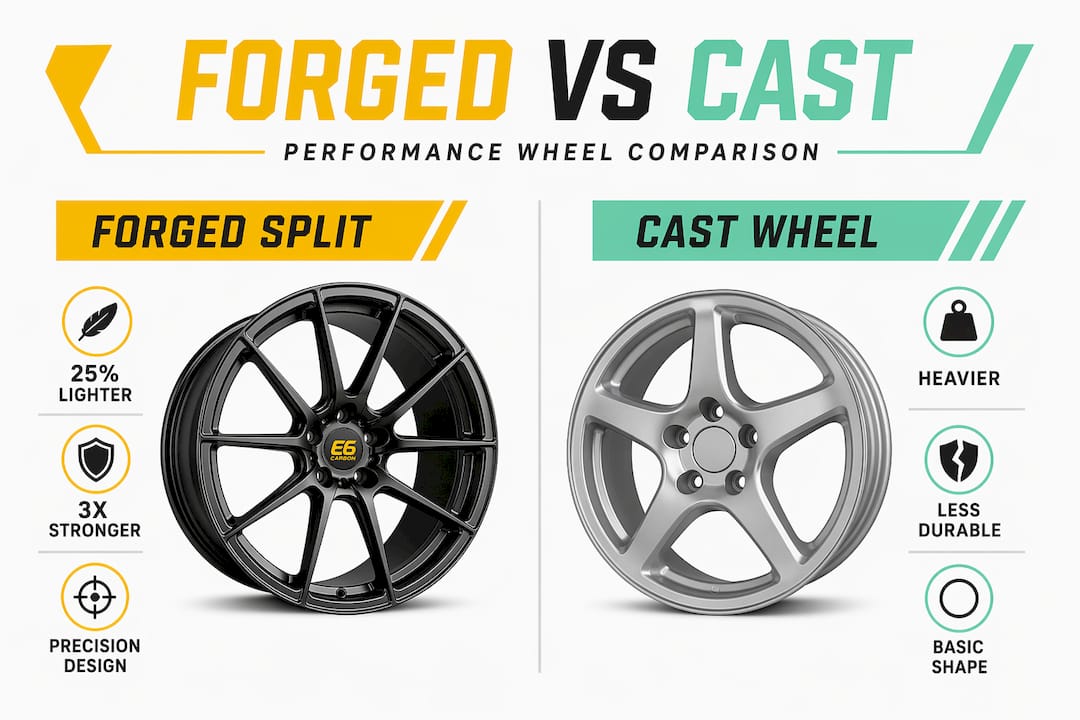
Cast wheels are poured as liquid metal into a mold and cooled. The cooling process introduces microscopic porosity and inconsistent grain alignment throughout the wheel. Those inconsistencies become stress concentrators under load. Forged aluminum eliminates most of that porosity, which is why forged wheels show higher impact resistance in motorsport environments.
The split spoke design adds another layer of engineering logic on top of the forging advantage. Instead of a single solid spoke running from the hub to the rim, a split spoke divides into two branches. This geometry does several things at once:
- It distributes load across a wider contact area at the rim flange
- It allows the spoke roots to be narrower at the hub, saving material and mass
- It creates multiple load paths so a single impact point does not concentrate stress on one spoke
- It opens up the face of the wheel for better brake cooling airflow
Pro Tip: When comparing forged vs cast spokes at a wheel shop, look at the spoke cross-sections. Forged spokes will have sharper edges and tighter radii because the material can be machined more aggressively without sacrificing integrity.
The combination of a forged aluminum body and a split spoke layout is why this wheel style appears on factory configurations from Ferrari, Lamborghini, and McLaren. It is not a styling decision made in isolation. It reflects a deliberate engineering choice to extract maximum performance from the wheel’s structure.
Performance advantages that actually matter on the road and track
Here is where the physics get interesting, and where the benefits of forged split spokes translate directly into driving experience.
Unsprung mass is the weight of every component not supported by your suspension springs. This includes wheels, tires, brake rotors, and calipers. Reducing unsprung mass is one of the highest-return weight reduction moves in vehicle dynamics because that mass moves with every road input rather than being isolated by the spring and damper system. Forged aluminum wheels are up to 25% lighter than cast counterparts, and that reduction in unsprung mass improves handling response, acceleration, and braking in ways you feel immediately.
Reduced rotational inertia is the related benefit that gets less attention but deserves more. A lighter wheel spinning at speed stores less kinetic energy. When you brake, that energy must be shed. When you accelerate, that energy must be added. A lighter wheel requires less from your engine and your brakes in every direction of speed change. At a race track, where you are repeating that cycle hundreds of times per lap, the cumulative effect is significant.
The structural advantages also compound over time. Consider this comparison:
| Category | Forged split spoke | Cast wheel |
|---|---|---|
| Weight vs. cast | Up to 25% lighter | Baseline |
| Relative strength | ~3x stronger | Baseline |
| Grain structure | Dense, aligned | Random, porous |
| Spoke load distribution | Multiple paths via split | Single path per spoke |
| Brake airflow | Open face improves cooling | Depends on design |
| Customization precision | CNC to tight tolerances | Limited by mold geometry |
Split spokes provide balanced support and reduced weight in ways that directly translate to structural integrity at speed. On a track where wheels experience lateral loading in corners, braking torque, and road irregularities simultaneously, having multiple load paths in the spoke design is not a luxury. It is a safety margin.
Beyond handling, forged split spoke wheels improve the overall vehicle dynamics picture. Suspension components work more efficiently when the wheel mass is lower. Shock absorbers respond faster to road inputs. Tire contact patch stays more consistent through corners. These gains are why racing wheels offer measurable performance benefits that justify the cost difference for track-focused builds.
Practical considerations before you commit
Forged split spoke wheels are worth understanding fully before you buy, including the parts that require your attention.
The cost is real. A full set of premium forged split spoke wheels can run $10,000 or more depending on sizing, finish, and manufacturer. For a dedicated track car or a premium street build where performance margins matter, that investment is justified. For a car that sees occasional canyon runs and mostly commuting, the calculus is different. Be honest about how the car is actually used.
Maintenance is non-negotiable. Brake dust and road debris damage finish quickly if neglected. The open face of split spoke designs, while good for brake cooling, also exposes more of the spoke and barrel to contamination. A consistent cleaning routine with wheel-safe, pH-neutral soap prevents finish degradation and makes it easier to spot damage during cleaning.
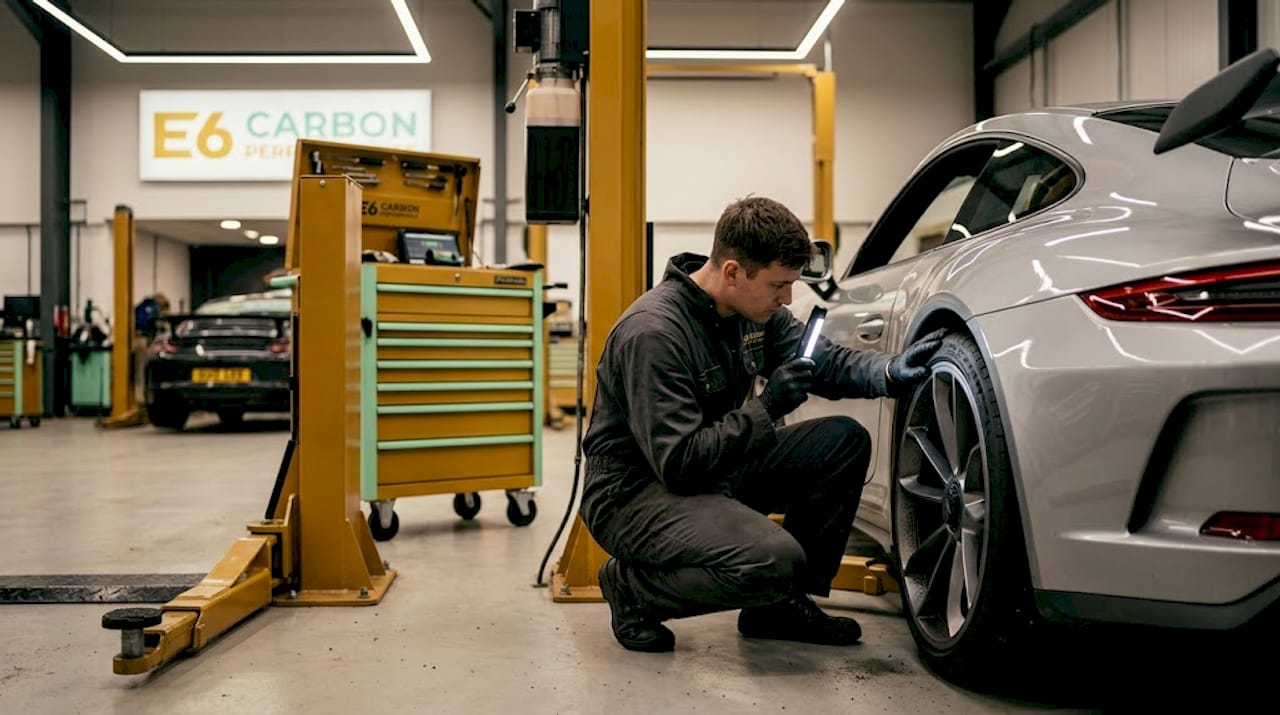
Forged wheels require regular checks for cracks even with their superior strength. No wheel is impervious to pothole strikes or curb contact. The benefit of forged construction is that cracks tend to propagate more slowly and predictably than in cast wheels, giving you more warning before failure. But that only helps if you are actually looking.
Here is what a smart maintenance routine looks like in practice:
- Clean wheels after every track session and weekly on street cars
- Inspect spoke roots and rim edges for impact marks or micro-cracking after any significant road hazard contact
- Avoid pressure washing directly into spoke crevices at high pressure, which can force contaminants under coatings
- Check lug torque periodically, as forged wheels seat precisely and loose hardware can cause fretting damage at the hub face
Pro Tip: A bright LED flashlight and a 10-minute inspection after every track day will catch stress marks before they become cracks. Look specifically at the spoke roots where they meet the barrel and the hub mounting face.
For more detailed guidance on what to look for, the forged wheel inspection guide at E6 Carbon is a practical starting point.
Aesthetics and customization beyond the basics
Performance is the headline reason to choose forged split spokes. The design flexibility enabled by the forging process is what makes them work visually on everything from a track-prepped BMW M4 to a show-quality Lamborghini Urus.
Because forged blanks are machined rather than molded, spoke profiles can be shaped to tight tolerances that a cast mold cannot achieve. Sharp spoke edges, aggressive undercuts, and complex barrel profiles are all possible. Customization options include finishes, spoke counts, and unique machining styles through precision CNC processes, meaning two cars with the same wheel model can still look distinctly different based on finish selection alone.
Split spoke designs balance aesthetics and structural benefits better than solid spoke or mesh alternatives. A mesh wheel covers the brake components and traps heat. A solid spoke wheel looks heavy even when it is not. Split spokes visually open up the wheel face, display the brake hardware as part of the aesthetic, and communicate the performance intent of the build without saying a word.
The way wheel design transforms vehicle aesthetics is rarely appreciated until you see a well-chosen forged split spoke set on a properly specced car. The proportions of the spoke width, the depth of the barrel, and the finish color interact with the car’s body lines in ways that a production cast wheel simply cannot replicate. For enthusiasts who care about both performance and presentation, that matters.
Split spokes also improve aesthetics and offer lightweight benefits over traditional single-spoke designs, making them the most versatile choice across race, street, and show applications.
My honest take on forged split spokes
From what I have seen working closely with high-performance wheel setups across track builds and premium street cars, the forged split spoke format is genuinely the most complete wheel choice available today. Not because it is the most expensive option, but because it solves multiple problems at once rather than optimizing for one thing at the cost of another.
What I find most interesting is how often enthusiasts focus on the weight number alone. Yes, a 25% weight reduction over cast is meaningful. But the grain structure improvement is the part that earns my trust on a track. I have seen cast wheels fail suddenly under sustained load. Forged wheels, in my experience, give you warning. They crack slowly. That predictability is worth paying for.
The maintenance reality does catch people off guard. I have watched beautiful forged split spoke sets show up at track days absolutely covered in brake dust from the previous session, with owners unaware that brake deposits can etch into anodized or polished finishes within hours. The performance gains are only preserved if the care routine matches the investment.
My view on emerging alternatives like carbon fiber wheels is that they serve a specific, narrow use case at the extreme end of weight reduction. For the broad range of performance and luxury applications, forged split spokes hit the right balance of durability, serviceability, customization, and outright performance that most builds actually need.
— Kunal
Explore forged split spoke wheels from E6 Carbon
If this breakdown has you ready to spec a set, E6 Carbon’s forged wheel lineup gives you a concrete place to start. The AR03 multipiece forged wheels and AR01 multipiece wheels represent two of the most popular configurations in the E6 Forged catalog, with sizing and finish options that cover everything from track-spec BMW fitments to wide-body supercar applications.
The E6 Carbon team specializes in matching wheel specifications to your exact build requirements, which matters more than most buyers realize when you are dealing with hub-centric forged fitments. For anyone new to running forged wheels, the installation guide covers the setup process with the precision this type of wheel demands.
FAQ
Why choose forged spokes over cast for performance?
Forged wheels are up to 25% lighter and approximately three times stronger than cast wheels, reducing unsprung mass and improving handling, braking, and acceleration response.
How do forged split spokes improve handling?
The split spoke geometry creates multiple load paths across the wheel face, distributing stress more evenly while reducing total wheel weight, which lowers rotational inertia and sharpens steering response.
Are forged split spokes worth the cost for street use?
For premium street builds or cars that see track days, the strength and weight savings justify the investment. For purely casual daily driving, the return on cost is lower but the durability advantage remains.
How often should forged split spoke wheels be inspected?
Inspect after every track session and following any significant impact with road hazards. Check spoke roots, rim edges, and the hub mounting face for stress marks or micro-cracking.
What finishes are available on forged split spoke wheels?
Because forged blanks are CNC machined rather than molded, the customization options include polished, brushed, anodized, painted, and multi-tone finishes, with spoke count and profile variations available across most manufacturers.